
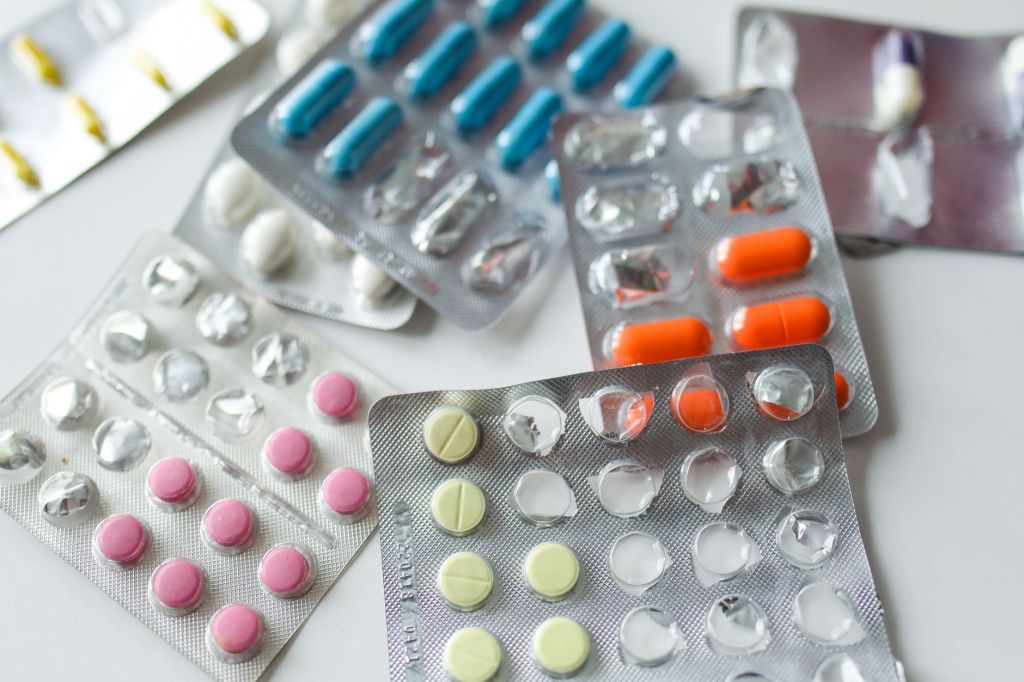
Just realised the pill you swallowed expired months ago? Take a breath — for most medicines, this is far less dangerous than it feels.
What “Expired” Really Means
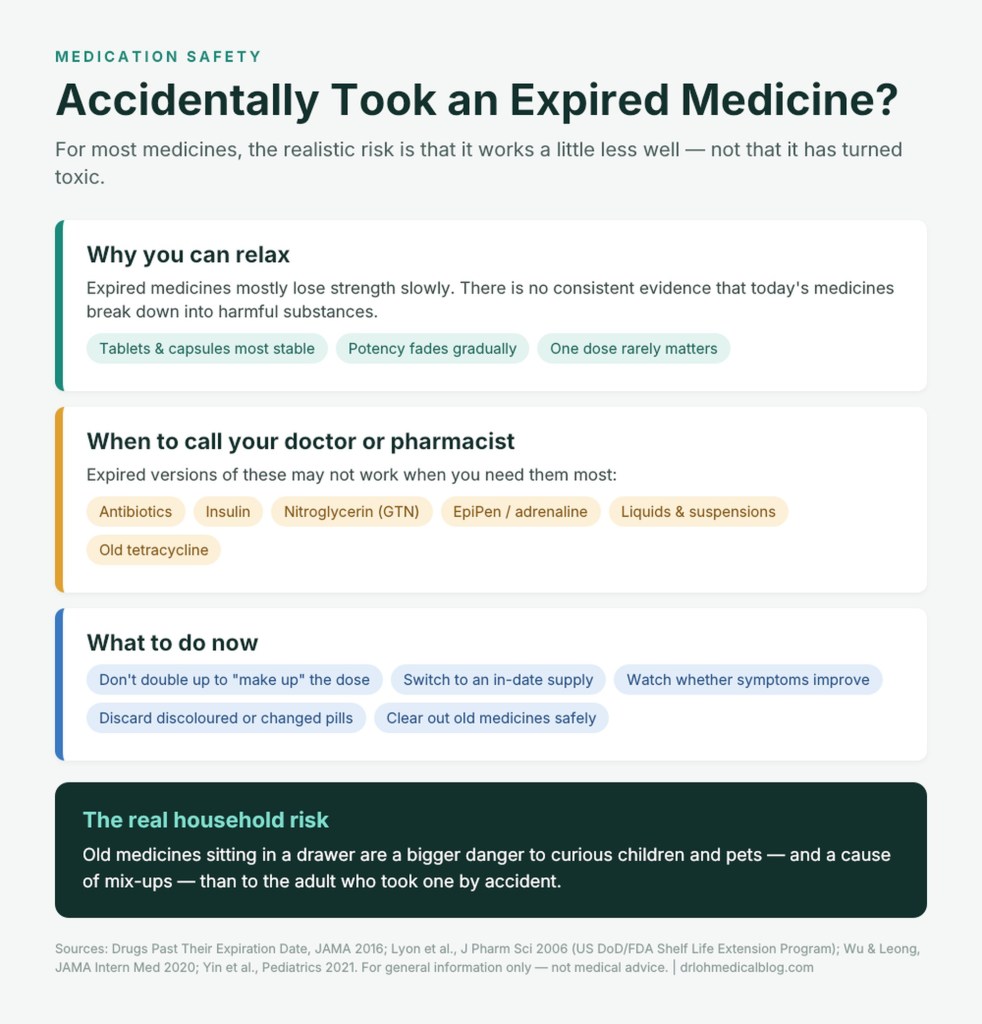
The date on the box is the last day the manufacturer guarantees full strength and safety under proper storage. It is not the day the medicine turns harmful.
The best evidence comes from the US military, which wanted to avoid throwing away huge medicine stockpiles. Together with the FDA, it ran the Shelf Life Extension Program to test medicines long after their expiry dates:
- About 88% of 3,005 batches (covering 122 different products) stayed stable past their expiry date.
- On average, those batches lasted 66 months — over 5 years — beyond the printed date.
- None failed within the first year after expiry.
Weaker, Not More Dangerous
For most medicines, the realistic risk of an expired one is that it works a little less well — not that it becomes poisonous.
- No consistent evidence of harmful breakdown products in today’s medicines.
- Tablets and capsules are the most stable. Liquids, syrups and suspensions lose strength faster.
- Storage matters as much as the date. Heat and humidity speed up breakdown, so a bathroom cabinet in our climate ages medicines faster than a cool, dry drawer.
When It’s Worth Calling Your Doctor or Pharmacist
The concern with these is that they may not work when you need them most:
- Antibiotics — an under-strength course may not clear an infection
- Insulin – for glucose control
- Nitroglycerin (GTN) for chest pain
- Adrenaline auto-injectors (EpiPen) for severe allergies
- Liquid medicines and suspensions
If you took one of these and the condition it treats isn’t improving — or you feel unwell in any unexpected way — get advice.
What to Do Now
- Don’t double up. Taking an extra dose to “make up” for a weaker one can cause more problems than it solves.
- Switch to an in-date supply for your next dose.
- Watch your symptoms. If the medicine was treating something, make sure it’s getting better.
- Look before you swallow. Throw away pills that are discoloured, crumbly or look different.
- Clear out the cabinet. Return old medicines to your clinic or pharmacy where take-back is available. Old medicines lying around are a poisoning risk for children and pets, and a common cause of mix-ups.
If a child has swallowed medicine not meant for them — expired or not — the concern is how much, not the date. Seek medical help straight away.
The Bottom Line
Accidentally taking a single expired tablet is very unlikely to harm you — most medicines simply lose strength slowly. Switch to a fresh supply, don’t double up, and call your doctor if it was a critical medicine or you’re not getting better.
References
- The Medical Letter. Drugs Past Their Expiration Date. JAMA. 2016;315(5):510-1.
- Lyon RC et al. Stability Profiles of Drug Products Extended Beyond Labeled Expiration Dates. J Pharm Sci. 2006;95(7):1549-60.
- Wu PE, Leong D. What Should I Know About Medication Storage and Disposal? JAMA Intern Med. 2020;180(11):1560.
- Coffey KC. Is There a Role for Expired Medications in Developing Countries? Clin Pediatr (Phila). 2013;52(1):7-9.
- Huang Y et al. Factors Influencing the Attention to Home Storage of Medicines in China. BMC Public Health. 2019;19(1):833.
- Yin HS et al. Preventing Home Medication Administration Errors. Pediatrics. 2021;148(6):e2021054666.



Leave a Reply