
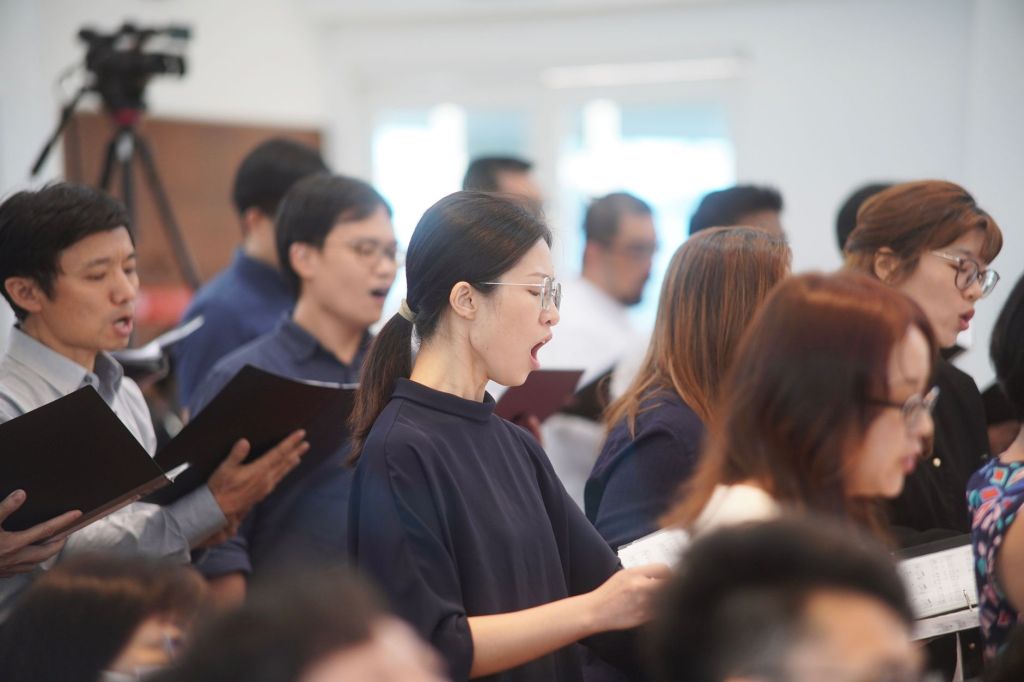
Could joining a weekly singing group help mothers with postnatal depression?
What the study did
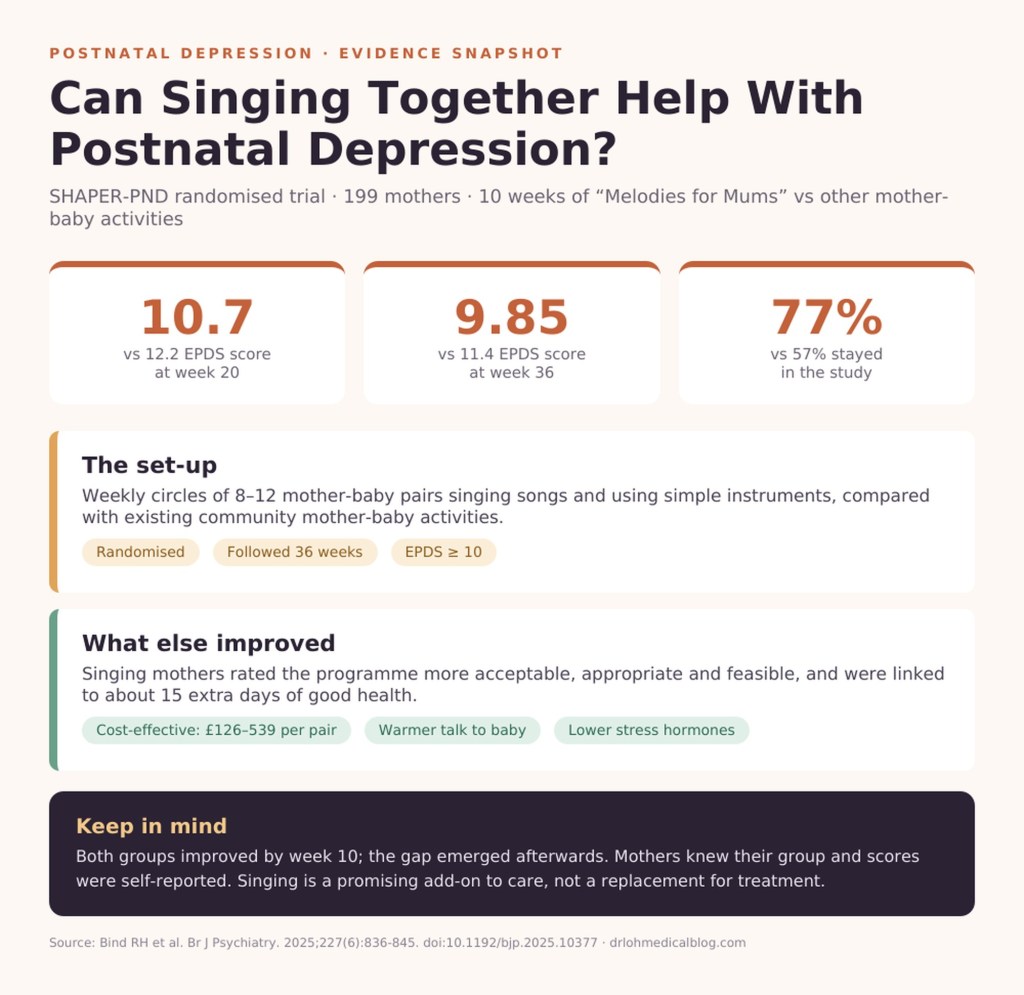
Researchers in London recruited 199 mothers with symptoms of postnatal depression (a score of 10 or more on the Edinburgh Postnatal Depression Scale). Most scored above 13, a level that would usually prompt treatment.
- Singing group (133 mothers): weekly sessions for 10 weeks, with 8 to 12 mother-baby pairs sitting in a circle, learning songs and using simple instruments (the “Melodies for Mums” programme).
- Comparison group (66 mothers): existing community mother-baby activities.
Mothers were allocated by chance and followed for 36 weeks.
What they found
- Both groups improved by week 10. Support and time out of the house clearly help.
- Singing mothers kept improving. At week 20 their average score was 10.7 vs 12.2, and at week 36 it was 9.85 vs 11.4.
- Mothers in the singing group were more likely to stay in the study (77% vs 57%) and rated their programme as more acceptable, appropriate and feasible.
Why might singing help?
Companion studies from the same trial suggest several possible reasons. Singing mothers talked to their babies more warmly, and they showed signs of closer attachment. They also had lower stress-hormone and inflammation markers. These were secondary findings, so they point to a mechanism rather than prove one.
Things to keep in mind
- The mothers knew which group they were in, and depression scores were self-reported, so some of the benefit may reflect expectation.
- The comparison was other mother-baby activities, not antidepressants or psychological therapy. Singing should not replace treatment for moderate to severe depression.
- Mothers who felt the group suited them stayed in it, and the results may not apply to every community.
The Bottom Line
For mothers with postnatal depression, a weekly singing group gave longer-lasting symptom relief than other mother-baby activities, and it is inexpensive and well liked. It works best alongside, not instead of, professional care. If you or someone you know is struggling after childbirth, speak to a doctor.
Related: Postpartum Blues vs. Postpartum Depression and Medical Myths or Facts #36: Do Fathers Get Post Partum Blues?
References
- Bind RH, et al. Clinical effectiveness, implementation effectiveness and cost-effectiveness of a community singing intervention for postnatal depressive symptoms, SHAPER-PND: randomised controlled trial. Br J Psychiatry. 2025;227(6):836-845.
- Rebecchini L, et al. Maternal communication and attachment following a group singing intervention for postnatal depression: findings from the SHAPER-PND trial. Psychol Med. 2026;56:e98.
- Kirkpatrick M, et al. Community singing intervention reduces maternal salivary cytokines and enhances maternal-infant cortisol synchrony in postnatal depression. Brain Behav Immun. 2026;136:106600.
- Fancourt D, Perkins R. Effect of singing interventions on symptoms of postnatal depression: three-arm randomised controlled trial. Br J Psychiatry. 2018;212(2):119-121.



Leave a Reply