
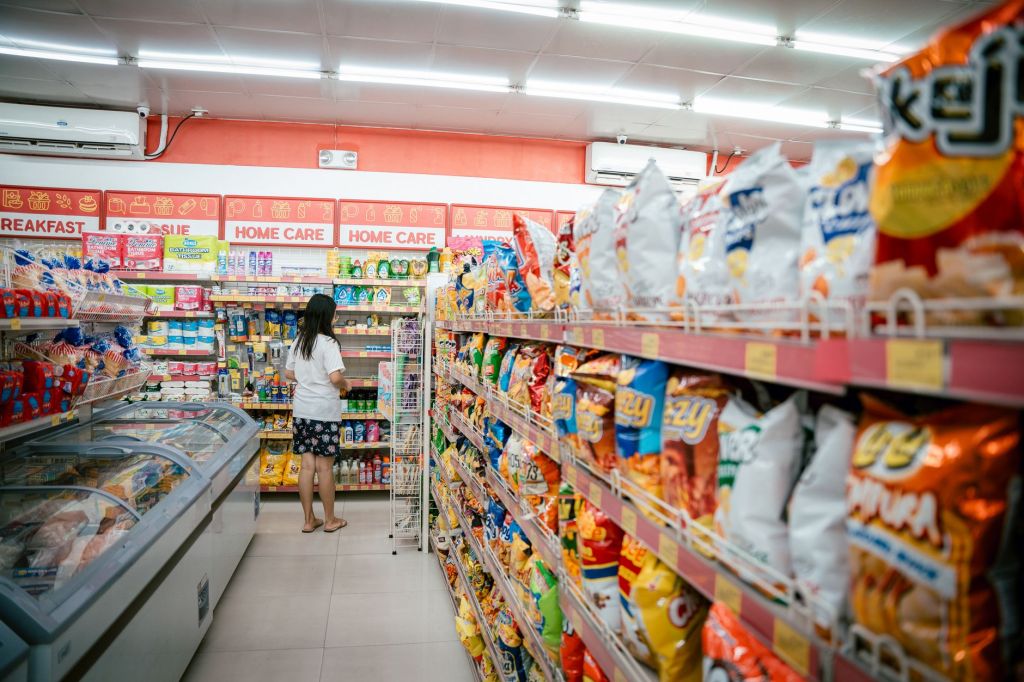
Is every ultra-processed food bad for you?
The evidence says no — but most of what fills grocery store shelves is, and the health risks are bigger than most people realize.
What Does “Ultra-Processed” Actually Mean?
The term “ultra-processed food” was first introduced in 2009 to describe products that are durable, convenient, and highly palatable, often made with additives and industrial ingredients that have no real place in a home kitchen. Think foods that need little to no preparation and are packaged to be eaten anywhere, anytime.
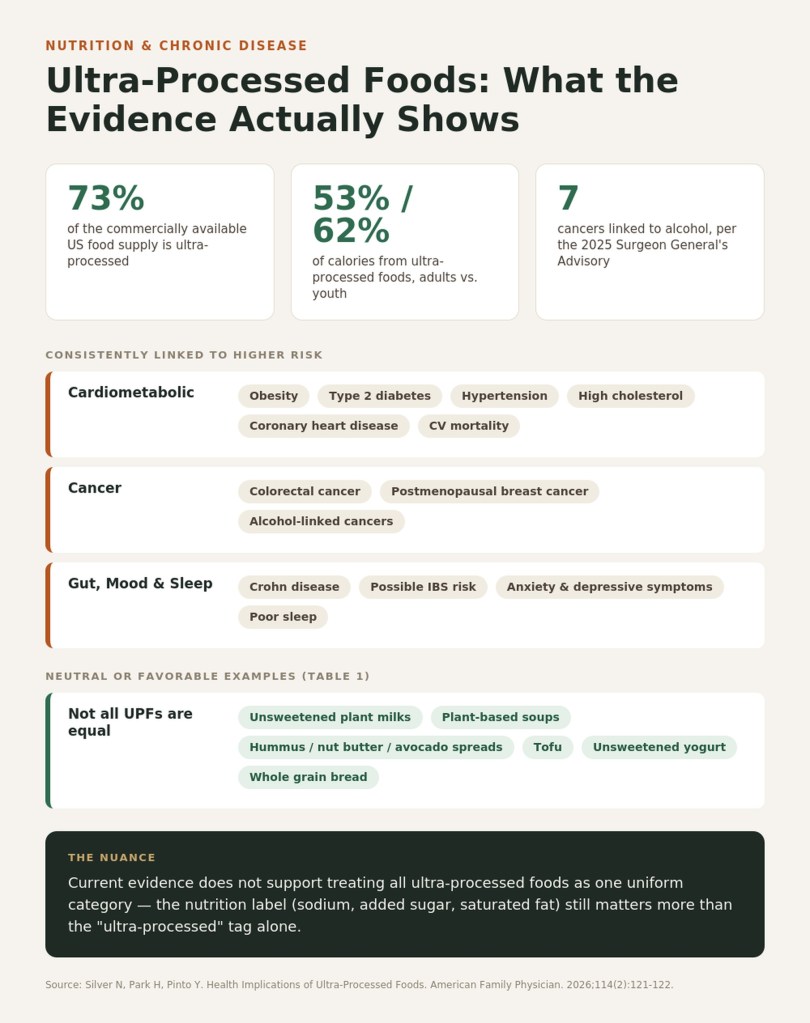
These foods are no longer the exception — they’re the rule. Ultra-processed products make up an estimated 73% of the commercially available food supply in the US, and they account for roughly 53% of the calories adults eat and 62% of the calories children and teens eat.
Heart Disease, Diabetes, and Weight
Heart disease remains the leading cause of death in the US. Most ultra-processed foods are high in saturated fat, added sugar, and sodium — a combination the American Heart Association has flagged as harmful to cardiometabolic health. Multiple long-term studies consistently link higher intake of these foods to obesity, type 2 diabetes, high blood pressure, high cholesterol, coronary heart disease, and cardiovascular death.
The encouraging part: cutting back on red and processed meats, refined grains, sugar-sweetened drinks, and desserts — while swapping in minimally processed plant foods like vegetables, fruits, legumes, nuts, and whole grains — is consistently tied to better heart and metabolic health.
Cancer Risk
Cancer is the second leading cause of death in the US, and colorectal cancer deaths have been rising among people younger than 50. The American Cancer Society recommends cutting back on red and processed meats, sugar-sweetened beverages, alcohol, refined grains, and other highly processed foods, while favoring plant-based diets rich in fiber — patterns linked to lower risk of colorectal and postmenopausal breast cancer.
One detail that surprises a lot of people: many alcoholic beverages, including premixed cocktails, flavored malt drinks, and hard seltzers, count as ultra-processed. A 2025 US Surgeon General’s Advisory linked alcohol to seven different cancers — oral, throat, larynx, esophageal, breast, liver, and colorectal — a risk that’s still widely underappreciated.
Gut, Mood, and Sleep
Research consistently links ultra-processed food intake to a higher risk of Crohn disease, though the evidence for ulcerative colitis is less clear. There’s also limited but growing evidence connecting these foods to irritable bowel syndrome.
On the mental health side, lower-quality evidence points to associations between ultra-processed food intake and anxiety, depressive symptoms, and poor sleep — though this relationship may run in both directions, with mood and sleep also shaping what we eat.
Not All Ultra-Processed Foods Are Equal
Here’s the nuance that often gets lost: current evidence doesn’t support treating every ultra-processed food as equally harmful. Some — as long as they’re not loaded with sodium, added sugar, or saturated fat — are associated with neutral or even favorable health outcomes, including:
- Unsweetened plant-based milks (soy, almond)
- Plant-based soups (mixed bean, tofu chili)
- Plant-based spreads (hummus, peanut butter, avocado-based products)
- Tofu
- Unsweetened yogurt
- Whole grain bread
The takeaway isn’t that all packaged food is off-limits — it’s that the nutrition label still matters more than the “ultra-processed” label alone.
The Bottom Line
Diets high in sodium and low in whole grains, nuts, fruits, and vegetables are a real driver of premature death — and most ultra-processed foods push people in that direction through hyperpalatability, added sugar, sodium, and calorie density. The most consistent, evidence-backed advice is still the simplest: build meals around minimally processed, plant-based foods, and save highly processed options for foods you genuinely enjoy, in moderation, rather than as the default.
Related: Eat Well
References:
- Vadiveloo MK, et al. Ultraprocessed foods and their association with cardiometabolic health: evidence, gaps, and opportunities: a science advisory from the American Heart Association. Circulation. 2025;152(12):e245-e263.
- Rock CL, et al. American Cancer Society guideline for diet and physical activity for cancer prevention. CA Cancer J Clin. 2020;70(4):245-271.
- US Department of Health and Human Services. Alcohol and Cancer Risk: The US Surgeon General’s Advisory. 2025.
- Whelan K, et al. Ultra-processed foods and food additives in gut health and disease. Nat Rev Gastroenterol Hepatol. 2024;21(6):406-427.
- Lane M, et al. Ultra-processed food exposure and adverse health outcomes: umbrella review of epidemiological meta-analyses. BMJ. 2024;384:e077310.
- Wang L, et al. Association between ultra-processed food consumption and mortality among US adults: prospective cohort study of NHANES, 2003-2018. J Acad Nutr Diet. 2025;125(7):875-887.e7.
- Monteiro CA, et al. Ultra-processed foods and human health: the main thesis and the evidence. Lancet. 2025;406(10520):2667-2684.
- Tessier AJ, et al. Optimal dietary patterns for healthy aging. Nat Med. 2025;31(5):1644-1652.
- Williams AM, et al. Ultra-processed food consumption among youth and adults: United States, August 2021-August 2023. NCHS Data Brief. 2025;(536):1-11.





Leave a Reply