
Smart Food Choices for Faster Diarrhea Healing
Here’s an evidence-based breakdown of what to skip, what to reach for instead.
Foods to Avoid During Diarrhea
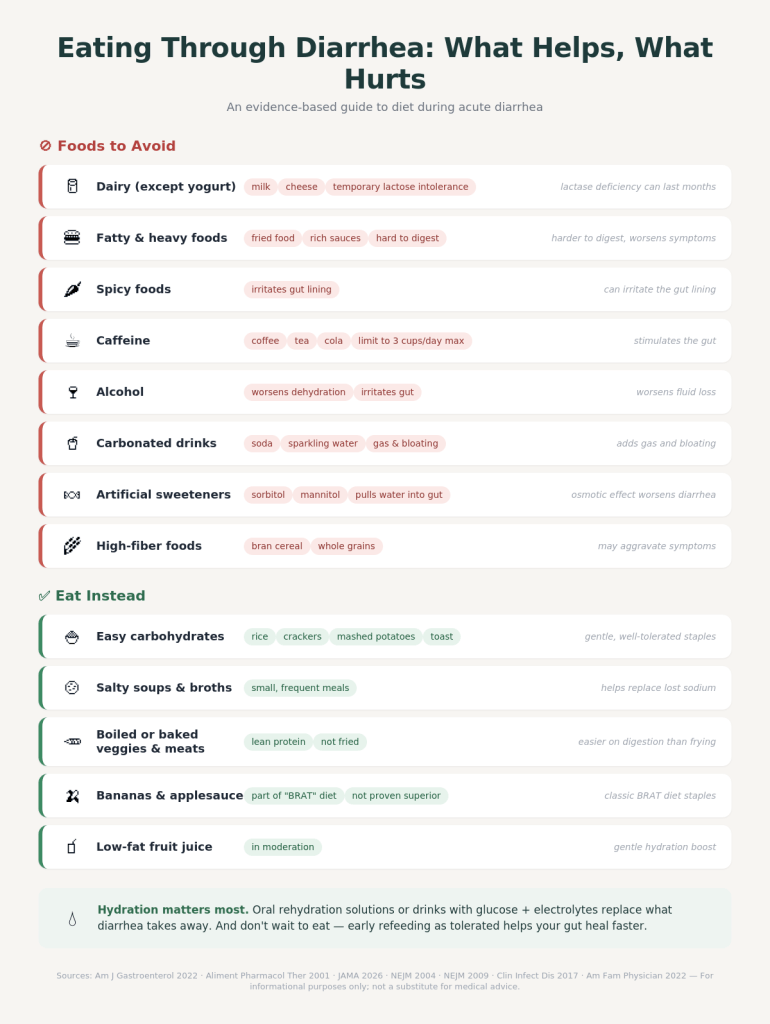
Dairy products (except yogurt). Diarrhea can trigger a temporary lactase deficiency, making it harder to break down the lactose in milk and cheese. This deficiency can linger for months after the initial illness has resolved. Yogurt is the exception—its live cultures help pre-digest lactose, making it generally well tolerated.
Fatty and heavy foods. These take longer to digest and can worsen an already irritated gut.
Spicy foods. Capsaicin and other irritants can further inflame the digestive tract.
Caffeine. Coffee, tea, and cola act as gut stimulants that can speed up transit time. If you can’t cut it out entirely, keep it to 3 cups or fewer per day.
Alcohol. It worsens dehydration and irritates the intestinal lining—two things you don’t want when you’re already losing fluids.
Carbonated beverages. The gas in sodas and sparkling drinks can add bloating and discomfort on top of existing symptoms.
Artificial sweeteners. Sorbitol and mannitol, common in “sugar-free” gums and candies, have an osmotic effect that pulls water into the gut and can actively worsen diarrhea.
High-fiber foods. Bran cereals, whole grains, and high-fiber breads can aggravate symptoms in some people during an acute episode.
What to Eat Instead
The goal during diarrhea is simple: stay hydrated and choose foods that are gentle on digestion. Good options include:
- Small, frequent meals rather than large ones
- Salty soups and broths
- Easy carbohydrates like rice, crackers, and mashed potatoes
- Boiled or baked (not fried) vegetables and lean meats
- Low-fat fruit juices
You’ve probably heard of the BRAT diet—bananas, rice, applesauce, and toast. It’s a reasonable starting point, but it’s worth knowing that the evidence supporting BRAT as superior to a broader, balanced diet is actually quite limited. Think of it as a comfortable option, not a required protocol.
Hydration Is the Real Priority
More important than any specific food list is fluid intake. Diarrhea depletes both water and electrolytes, so oral rehydration solutions or drinks containing glucose and electrolytes are the most effective way to replace what’s lost and prevent dehydration-related complications.
Don’t Wait to Eat Again
A common instinct is to rest the gut completely until symptoms fully resolve. The evidence points the other way: early refeeding, as tolerated, actually decreases intestinal permeability and leads to better nutritional outcomes than prolonged fasting. In other words, once you can keep food down, gently reintroducing it helps your gut heal faster—it doesn’t set you back.
The Bottom Line
During diarrhea, sidestep dairy (except yogurt), fatty or spicy foods, caffeine, alcohol, carbonated drinks, artificial sweeteners, and high-fiber foods. Lean instead on bland carbohydrates, broths, boiled proteins and vegetables, and—above all—consistent rehydration. And don’t be afraid to eat again as soon as you’re able; your gut recovers faster when you do.
Related: How Much Water Should I Drink?, How to Spot and Prevent Dehydration in Your Kids
References
- Menees SB, Lembo A, Charabaty A. Fecal Incontinence and Diarrhea During Pregnancy. Am J Gastroenterol. 2022.
- Wingate D, Phillips SF, Lewis SJ, et al. Guidelines for adults on self-medication for the treatment of acute diarrhoea. Aliment Pharmacol Ther. 2001.
- Singh P, Lee A, Sheth NM, Chey WD. Chronic, Noninfectious Diarrhea. JAMA. 2026.
- Thielman NM, Guerrant RL. Acute Infectious Diarrhea. N Engl J Med. 2004.
- DuPont HL. Bacterial Diarrhea. N Engl J Med. 2009.
- Shane AL, Mody RK, Crump JA, et al. 2017 IDSA Clinical Practice Guidelines for Infectious Diarrhea. Clin Infect Dis. 2017.
- Meisenheimer ES, Epstein C, Thiel D. Acute Diarrhea in Adults. Am Fam Physician. 2022.


Leave a Reply