

The Medical Conditions That Should Ground Your Trip
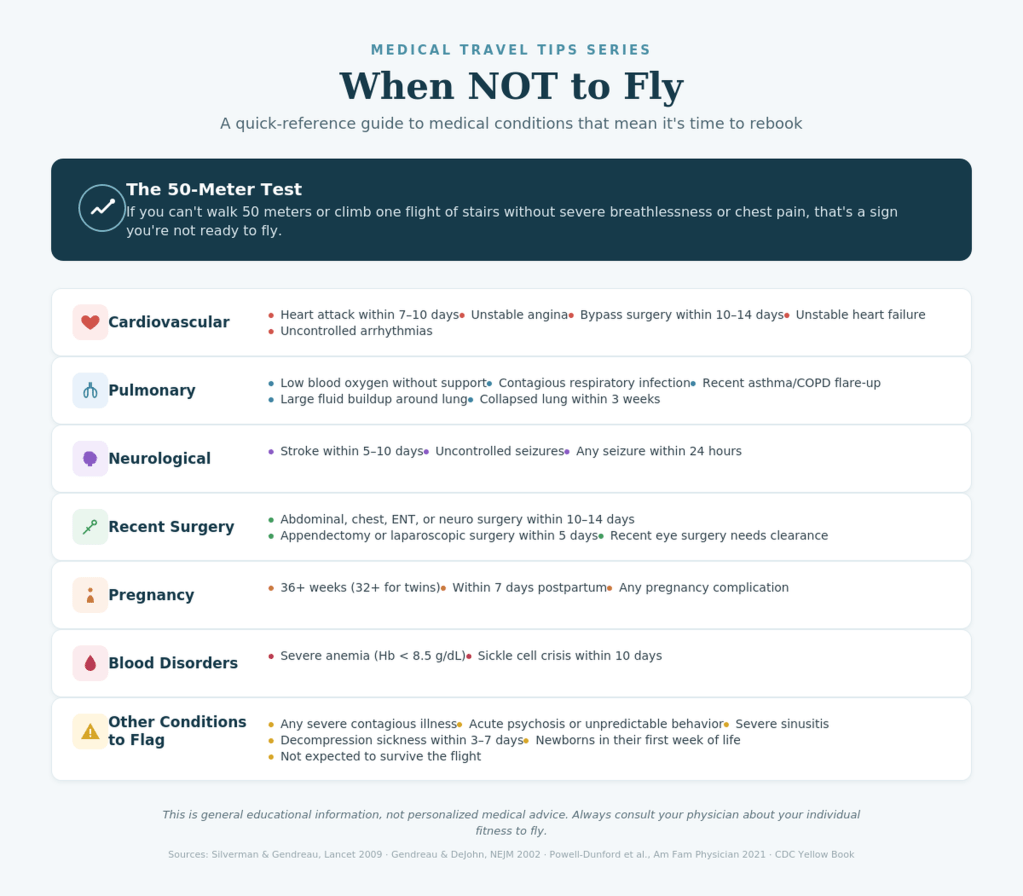
Cabin pressure at cruising altitude mimics conditions at roughly 6,000–8,000 feet above sea level, and that drop in oxygen and air pressure can turn a manageable health condition into a genuine emergency mid-flight.
Here’s a practical, evidence-based guide to the conditions that mean it’s time to rebook your flight.
Heart Conditions
The heart is one of the first organs to feel the effects of reduced oxygen, which is why cardiac recovery timelines are strict:
- Heart attack within the past 7–10 days (some guidance extends this to 3 weeks for higher-risk cases)
- Unstable angina
- Coronary artery bypass surgery within the past 10–14 days
- Heart failure that isn’t yet stabilized
- Arrhythmias that aren’t under control
Lung and Breathing Conditions
Anything that already limits how well your lungs move oxygen into your blood gets worse in a pressurized cabin:
- Any contagious respiratory infection
- A recent flare-up of asthma, COPD, or a restrictive lung disease
- A large buildup of fluid around the lungs (pleural effusion)
- A collapsed lung within the past 3 weeks (7–14 days if traveling with a medical escort)
One clear-cut rule from the American Family Physician guidelines: if you can’t walk 50 meters, or you need more than 4 liters per minute of oxygen, flying isn’t advisable.
Neurological Conditions
The brain is highly sensitive to oxygen fluctuations, which is why recent neurological events carry their own waiting periods:
- Stroke within the past 5–10 days (up to 2 weeks by some guidelines)
- Seizures that aren’t well controlled, or any seizure within the past 24 hour
Blood Disorders
- Severe anemia (hemoglobin under 8.5 g/dL), unless it’s a stable, chronic condition your doctor has already accounted for
- A sickle cell crisis, or one that occurred within the past 10 days
Recent Surgery
Surgery changes how your body handles both pressure shifts and physical stress, so timing matters:
- Abdominal, chest, ENT, or neurological surgery within the past 10–14 days
- Even “minor” procedures like an uncomplicated appendectomy or laparoscopic surgery need at least 5 days of recovery
- Recent abdominal, cardiothoracic, or eye surgery should always be cleared with your surgeon first — trapped gas or air pockets from these procedures can expand painfully, or dangerously, at altitude
Pregnancy
Pregnancy-related flight restrictions are less about oxygen and more about the risk of needing emergency care far from a hospital:
- 36 weeks or later in a single pregnancy (32 weeks or later for twins or multiples)
- Within 7 days of giving birth
- Any pregnancy complication, regardless of gestational age
Other Conditions to Flag Before Booking
- Any severe contagious illness
- Acute psychosis or unpredictable, aggressive behavior
- Severe sinusitis
- Decompression sickness within the past 3–7 days (a consideration for recent scuba divers)
- Newborns in their first week of life
Flying With Supplemental Oxygen
If you already use supplemental oxygen or your doctor is on the fence about your fitness to fly, it’s not necessarily a hard no. Airlines generally require:
- Written documentation from your physician confirming you can tolerate the cabin pressure
- At least 72 hours’ notice before departure to arrange in-flight oxygen
Keep in mind airlines retain the right to deny boarding to any passenger who appears medically unfit or unable to tolerate the pressure and oxygen changes of flight, so it’s worth sorting this out well before you’re at the gate.
The Bottom Line
Most air travel is safe for most people, even those managing chronic conditions. But if you’re recovering from a cardiac event, recent surgery, a stroke, or a complicated pregnancy — or you simply can’t manage a short walk or a flight of stairs without symptoms — that’s your body telling you to wait. A quick call to your doctor before booking can save you from a much more complicated situation at 35,000 feet.
Related: Medical Travel Tips #6 – Air Travel Tips, Medical Travel Tips Series
References:
- Silverman D, Gendreau M. Medical Issues Associated With Commercial Flights. Lancet. 2009.
- Gendreau MA, DeJohn C. Responding to Medical Events during Commercial Airline Flights. N Engl J Med. 2002.
- Powell-Dunford N, Adams JR, Grace C. Medical Advice for Commercial Air Travel. Am Fam Physician. 2021.
- Mase SR, Gearhart SL, Nardell EA, Brown CM. Air Travel. CDC Yellow Book.





Leave a comment