
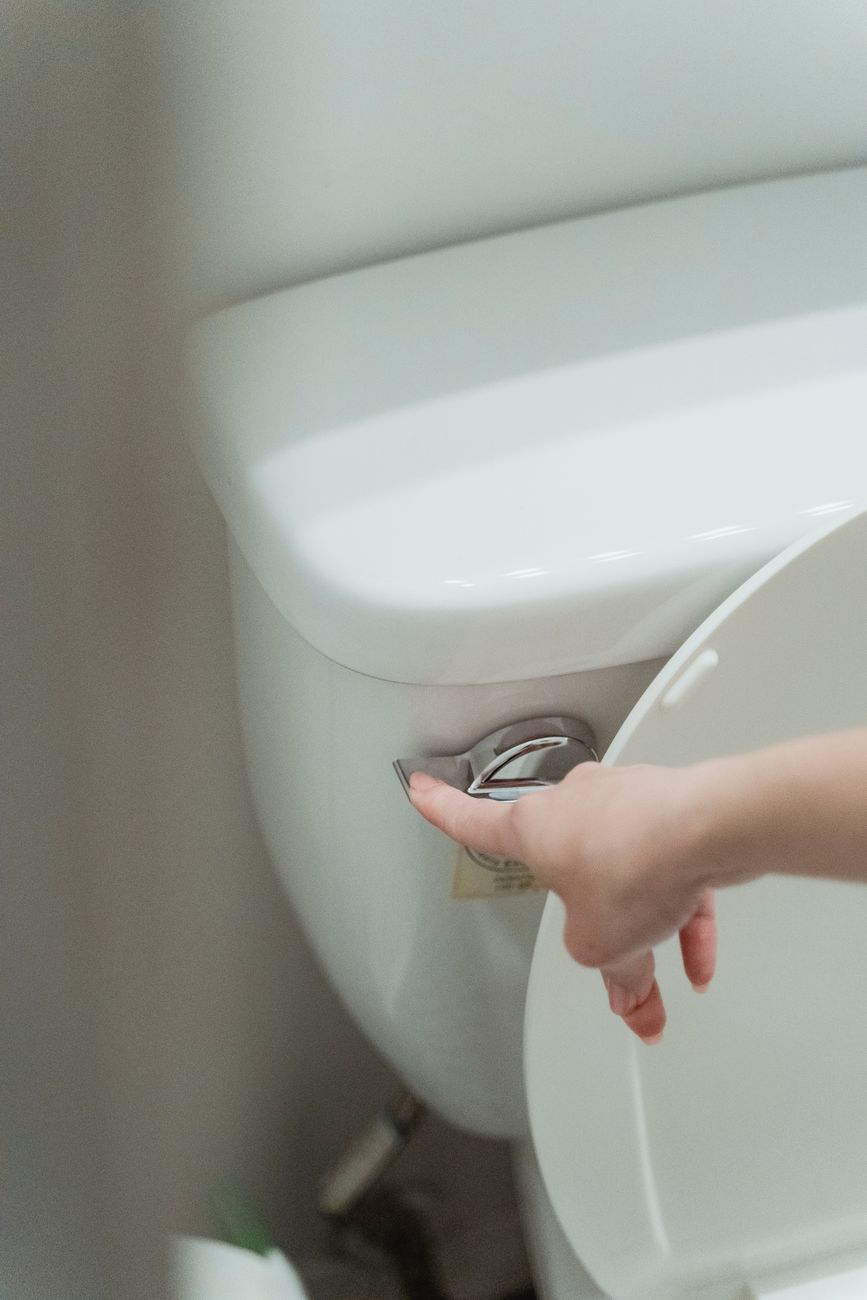
You flush the toilet and notice your urine is frothy or bubbly. Should you be concerned?
The honest answer: it depends on whether the bubbles stick around. Here’s what the science and clinical guidelines say about foamy urine — and when it’s worth a trip to your doctor.
The Science Behind the Bubble
Urine normally foams slightly when it hits the toilet bowl. The key variable is surface tension. Clean water has high surface tension and produces large bubbles that pop quickly. When protein — particularly albumin — is present in urine, it acts like a surfactant, lowering surface tension and creating smaller, denser, more stable foam.
Benign Causes: When Bubbles Mean Nothing
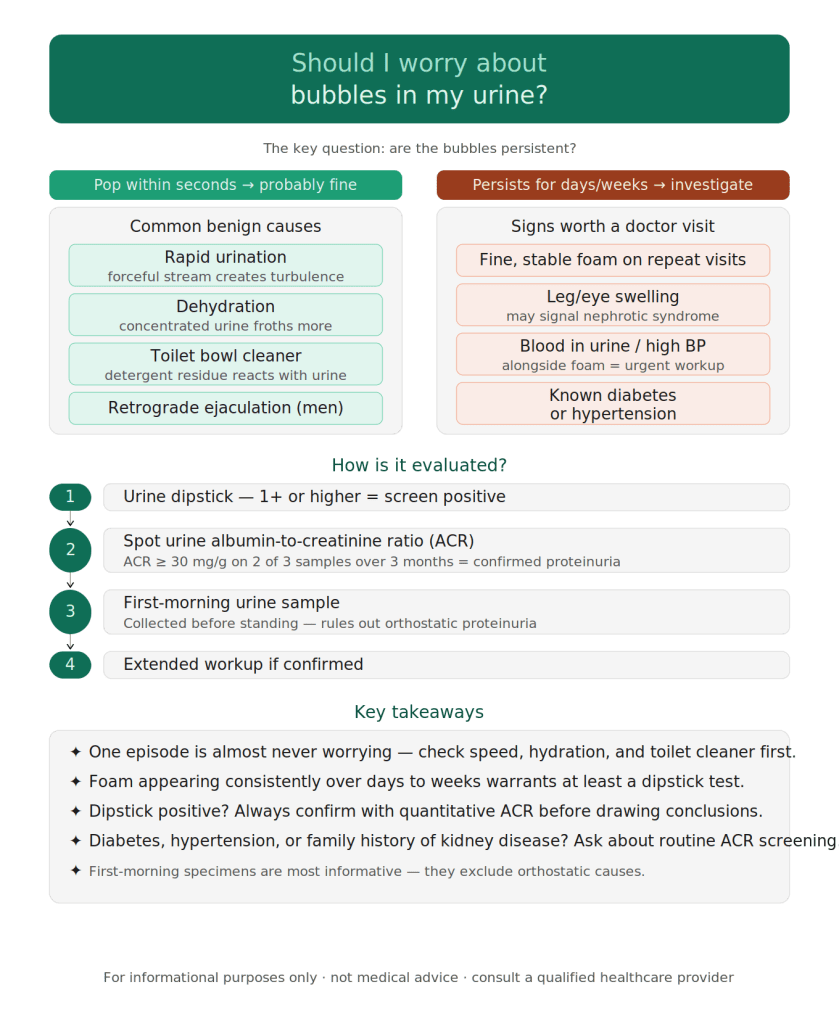
Before assuming the worst, consider these common, benign explanations:
- Retrograde ejaculation: In men, semen entering the bladder can cause transient foamy urine.
- Rapid urination: A forceful stream creates turbulence, producing bubbles that dissipate within seconds.
- Concentrated urine: Dehydration increases solute concentration, which can make urine slightly foamy.
- Toilet bowl cleaners: Detergent residue in the bowl reacts with urine to create foam — nothing to do with your kidneys.
| Key Distinction: Benign bubbles are large, pop quickly, and don’t recur. Proteinuria-related foam is persistent, fine-textured, and present across multiple episodes. |
When Bubbles Signal Something More: Proteinuria
Persistent foamy urine is the classic symptom of proteinuria — the abnormal excretion of protein in the urine, most often albumin. Proteinuria is not a diagnosis in itself; it is a marker of kidney dysfunction that warrants investigation.
Transient Proteinuria: A Real (and Common) Phenomenon
Not all proteinuria reflects underlying kidney disease. Several physiological states can produce transient protein spills:
- Intense aerobic exercise
- Fever or acute illness
- Emotional or physical stress
- Orthostatic (postural) proteinuria: A benign condition, particularly common in adolescents and young adults, in which protein appears in urine collected during upright activity but not in first-morning specimens.
Orthostatic proteinuria is a diagnosis of exclusion, confirmed by comparing first-morning urine (which should be protein-free) with a later daytime sample. According to a review in American Family Physician, it accounts for up to 60% of proteinuria cases in children and is generally associated with a benign long-term prognosis.
How Is Proteinuria Evaluated?
The clinical workup follows a stepwise approach, as outlined in a comprehensive urinalysis review in American Family Physician:
- Step 1 — Urine dipstick: A positive result (1+ or higher) is the first signal.
- Step 2 — Spot urine albumin-to-creatinine ratio (ACR): The preferred quantitative test. Creatinine-corrects for urine concentration. An ACR ≥30 mg/g on two out of three samples taken over 3 months confirms persistent proteinuria.
- Step 3 — First-morning sample: Collected before the patient stands up, to rule out orthostatic proteinuria.
- Step 4 — Extended workup: If proteinuria is confirmed, evaluation for underlying cause will be done.
| Red Flags: See a Doctor Soon! Persistent foam across multiple days or weeks • Swelling in legs, ankles, or around the eyes • Foamy urine with blood, high blood pressure, or reduced urine output • Known diabetes or hypertension with new onset foamy urine |
Practical Takeaways
- One episode of foamy urine is almost never cause for alarm. Check for obvious triggers first: speed of urination, hydration status, toilet cleaner.
- If the foam is persistent — appearing consistently over days to weeks — it warrants a urine dipstick test at minimum.
- First-morning specimens are more informative: they exclude orthostatic causes and reflect overnight filtration.
- High-risk groups — people with diabetes, hypertension, or a family history of kidney disease — should discuss periodic urine ACR screening with their physician regardless of symptoms.
- Proteinuria detected on dipstick always needs confirmation with quantitative testing before conclusions are drawn.
Related: Are You Waking Up At Night To Pee?
References
- Diskin CJ, Stokes TJ, Dansby LM, Carter TB, Radcliff L. Surface Tension, Proteinuria, and the Urine Bubbles of Hippocrates. Lancet. 2000.
- Chapman JR, Geissler EK, Pomfret EA, et al. 2017 KDIGO Clinical Practice Guideline on the Evaluation and Care of Living Kidney Donors. Kidney Disease: Improving Global Outcomes. 2017.
- Webster AC, Nagler EV, Morton RL, Masson P. Chronic Kidney Disease. Lancet. 2017.
- Leung AK, Wong AH, Barg SS. Proteinuria in Children: Evaluation and Differential Diagnosis. American Family Physician. 2017.
- Hitzeman N, Greer D, Carpio E. Office-Based Urinalysis: A Comprehensive Review. American Family Physician. 2022.





Leave a comment