

PCOS Has a New Name — And the Reason Why Actually Matters
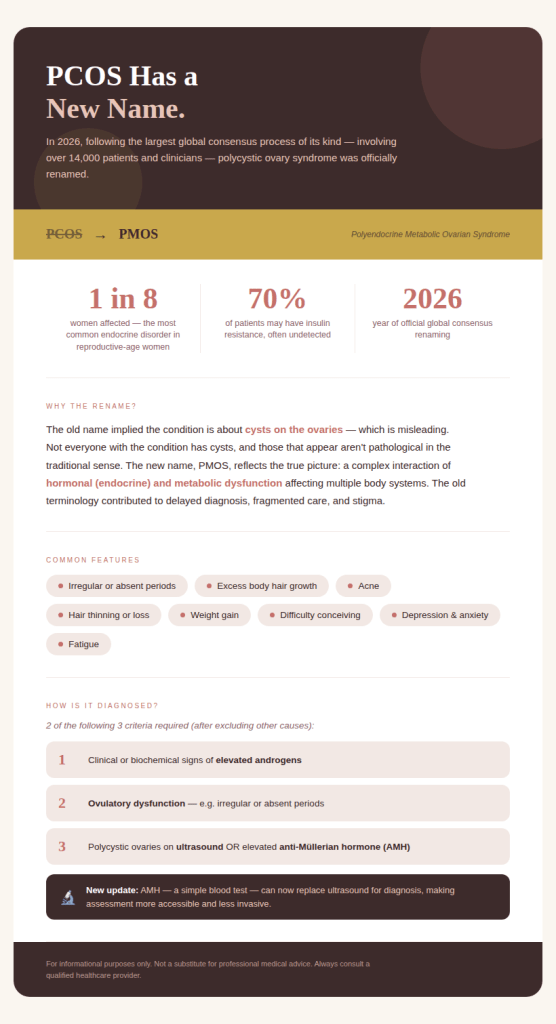
If you’ve ever heard of polycystic ovary syndrome (PCOS), you might soon be hearing a different name for it. In 2026, following one of the largest global health consensus processes ever conducted, PCOS was officially renamed Polyendocrine Metabolic Ovarian Syndrome — or PMOS.
Why the Name Change?
The old name, “polycystic ovary syndrome,” has long been considered misleading. It implies the condition is primarily about cysts on the ovaries — but that’s not quite accurate. Not everyone with PCOS has cysts, and those that appear aren’t the same as the kind of cysts most people imagine.
The new name, PMOS, is designed to better capture what’s actually going on: a complex interaction of hormonal (endocrine) and metabolic dysfunction that affects multiple body systems, not just the ovaries. Researchers behind the name change also noted that the old terminology contributed to delayed diagnosis, fragmented care, and stigma for many patients.
What Are the Signs?
PMOS is a multi-system condition. Common features include:
- Irregular or absent menstrual cycles
- Elevated androgens (often presenting as excess hair growth, acne, or hair thinning)
- Polycystic ovarian morphology on ultrasound
- Insulin resistance, which affects up to 70% of those with the condition
- Increased risk of type 2 diabetes, cardiovascular disease, and certain cancers over time
- Higher rates of depression and anxiety
No two people experience PMOS the same way, which is part of what has made it so hard to diagnose and treat consistently.
How Is It Diagnosed?
Updated international guidelines recommend diagnosing PMOS when two of the following three criteria are present, after ruling out other causes:
- Clinical or biochemical signs of elevated androgens
- Ovulatory dysfunction (e.g., irregular periods)
- Polycystic ovaries on ultrasound or an elevated anti-Müllerian hormone (AMH) blood test
One notable update: AMH — a simple blood test — can now be used in place of an ultrasound for diagnosis, making assessment more accessible and less invasive.
How Is It Managed?
There’s no single cure for PMOS, but it is very manageable. Treatment is personalised based on a person’s symptoms, life stage, and goals — including whether they’re trying to conceive.
General approaches include:
- Lifestyle support — no single diet or exercise plan is superior, but maintaining a healthy lifestyle across the lifespan is consistently recommended
- Oral contraceptives — often first-line for managing menstrual irregularity and androgen-related symptoms
- Metformin — commonly used to address metabolic features like insulin resistance
- Mental health screening — given the elevated rates of anxiety and depression, this is now a formal part of recommended care
- Regular metabolic monitoring — blood pressure, blood glucose, and cholesterol checks are important across the lifespan
Importantly, current guidelines emphasise shared decision-making and reducing weight stigma in all aspects of care.
What Should You Do?
If you’ve been diagnosed with PCOS, nothing changes about your condition or your care plan — the underlying biology is the same. The rename is about accuracy and advocacy, not a new disease.
If you suspect you might have PMOS but haven’t been evaluated, this is a good moment to speak with your doctor. Better diagnostic tools and updated guidelines mean more people are being identified and supported earlier than before.
Related: Women’s Health
References:
- Polyendocrine Metabolic Ovarian Syndrome, the New Name for Polycystic Ovary Syndrome: A Multistep Global Consensus Process. Teede HJ, Khomami MB, Morman R, et al. Lancet. 2026.
- Recommendations From the 2023 International Evidence-Based Guideline for the Assessment and Management of Polycystic Ovary Syndrome. Teede HJ, Tay CT, Laven JJE, et al. Journal of Clinical Endocrinology and Metabolism. 2023.
- Metabolic syndrome and its components in different phenotypes of polycystic ovary syndrome. Krentowska A, Kowalska I. Diabetes/Metabolism Research and Reviews. 2022.
- Immune Regulation in Polycystic Ovary Syndrome. Luan YY, Zhang L, Peng YQ, et al. Clinica Chimica Acta. 2022.
- Recommendations From the 2023 International Evidence-Based Guideline for the Assessment and Management of Polycystic Ovary Syndrome. Teede HJ, Tay CT, Laven J, et al. Human Reproduction. 2023.
- Polycystic Ovary Syndrome: Common Questions and Answers. Williams T, Moore JB, Regehr J. American Family Physician. 2023.
- ACOG Practice Bulletin No. 194: Polycystic Ovary Syndrome. Committee on Practice Bulletins—Gynecology. Obstetrics and Gynecology. 2018.





Leave a Reply