
The 10-Minute Workout Backed by Science
What Is REHIT?
REHIT stands for Reduced-Exertion High-Intensity Interval Training. It’s a specific, structured exercise protocol that packs meaningful cardiovascular and metabolic benefits into sessions of just 10 minutes — two to three times a week.
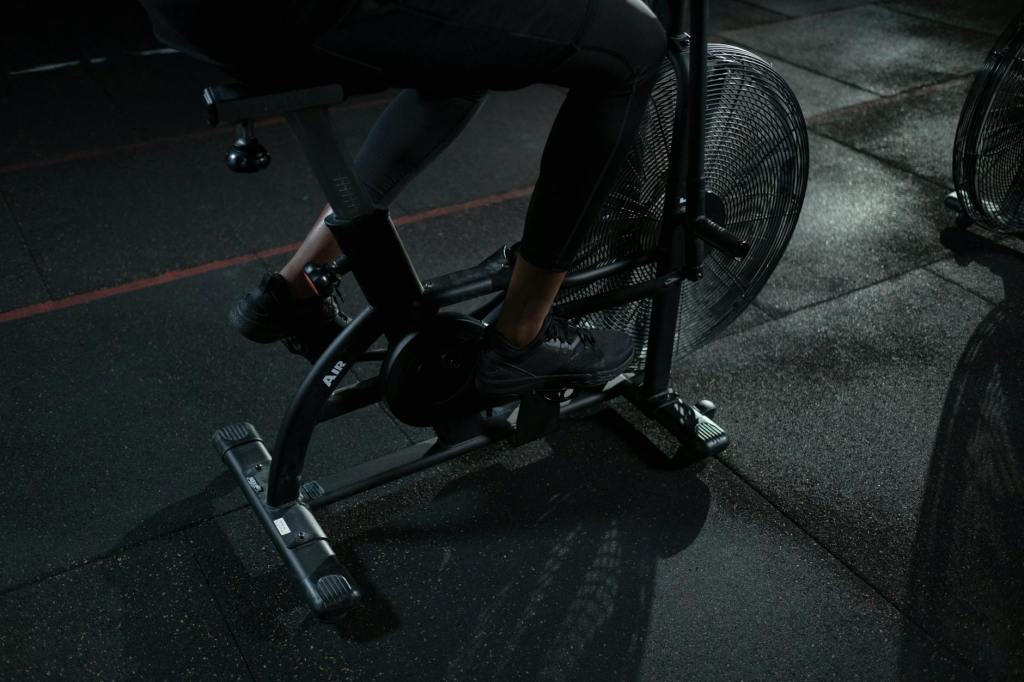
A typical REHIT session involves 10 minutes of easy, low-resistance cycling — think gentle pedalling, nothing strenuous (roughly 25–60 watts on a stationary bike). Embedded within that session are two short “all-out” sprints of 20 seconds each. That’s the core of it. The rest of the session acts as a warm-up and cool-down around those two explosive efforts.
In total, you’re looking at under 20 minutes of exercise per week to see real results.
That said, the sprints are genuinely hard for those 20 seconds. That’s the point. But it’s 40 seconds of hard effort across a 10-minute session, not 45 minutes on a treadmill.
What the Science Says
It improves cardiorespiratory fitness
VO2max is one of the best predictors of long-term health and longevity. Studies show that REHIT improves VO2max by 7–15% in sedentary individuals — comparable to, and in some cases better than, traditional moderate-intensity continuous training (MICT), despite taking a fraction of the time (as little as 14% of the time commitment, in some comparisons).
It improves heart health markers
REHIT has been shown to reduce systolic blood pressure by around 5% and decrease waist circumference. One study found that REHIT outperformed moderate-intensity training on the Fitness Fatness Index — a composite measure of cardiovascular disease risk — with 100% of REHIT participants achieving clinically significant improvements, compared to 53% in the moderate-exercise group.
It can improve insulin sensitivity
In sedentary men, six weeks of REHIT improved insulin sensitivity by 28%. It’s worth noting that results appear more variable in people with established type 2 diabetes, so if that applies to you, it’s worth discussing with your doctor.
It supports body composition
A 2024 meta-analysis found that low-volume HIIT protocols like REHIT reduce fat mass and waist circumference compared to staying inactive — though the effect on body composition is more modest than the cardiovascular benefits.
Who Is It For?
REHIT has been studied primarily in sedentary and physically inactive adults, including those with cardiometabolic risk factors like high blood pressure, elevated blood sugar, and excess waist circumference. For this group, the benefits appear consistent and clinically meaningful.
It’s also been trialled successfully in workplace settings, which speaks to its real-world feasibility — not just what works in a lab.
Who should be cautious: Because the sprints are genuinely high-intensity, appropriate health screening is recommended before starting — particularly for those with cardiovascular conditions, joint problems, or other medical concerns. There is also natural variation in how individuals respond to the protocol; not everyone will see the same results.
Practical Considerations
REHIT is typically performed on a stationary bike or cycle ergometer — equipment that allows for safe, controlled all-out efforts. Most gyms have these. Some purpose-built REHIT devices (like the CAR.O.L bike) automate the resistance changes to guide you through the sprints, though a standard stationary bike works too.
The protocol is done 2–3 times per week, with at least one rest day between sessions.
Conclusion
REHIT won’t replace all forms of physical activity, and it’s not a magic bullet. But for people who genuinely struggle to find time to exercise — and who aren’t currently active at all — it offers a scientifically supported, time-efficient way to start improving cardiovascular fitness and metabolic health.
Ten minutes, two or three times a week, is something most people can actually fit into their lives. And that might be exactly the point.
Related: Exercise Well, Live Long & Healthy #29 – Does Incidental Physical Activity Matter for Longevity?, Medical Myths or Facts #15 – Is Being A Weekend Warrior Healthy?
References:
- Metcalfe R, Vollaard N. Reduced-Exertion High-Intensity Interval Training (REHIT): A Feasible Approach for Improving Health and Fitness? Appl Physiol Nutr Metab. 2024.
- Metcalfe RS, Atef H, Mackintosh K, et al. Time-Efficient and Computer-Guided Sprint Interval Exercise Training for Improving Health in the Workplace. BMC Public Health. 2020.
- Metcalfe RS, Babraj JA, Fawkner SG, Vollaard NB. Towards the Minimal Amount of Exercise for Improving Metabolic Health: Beneficial Effects of Reduced-Exertion High-Intensity Interval Training. Eur J Appl Physiol. 2012.
- Cuddy TF, Ramos JS, Dalleck LC. Reduced Exertion High-Intensity Interval Training Is More Effective at Improving Cardiorespiratory Fitness and Cardiometabolic Health Than Traditional Moderate-Intensity Continuous Training. Int J Environ Res Public Health. 2019.
- Yin M, Li H, Bai M, et al. Is Low-Volume High-Intensity Interval Training a Time-Efficient Strategy to Improve Cardiometabolic Health and Body Composition? A Meta-Analysis. Appl Physiol Nutr Metab. 2024.
- Leahy DJ, Dalleck LC, Ramos JS. Changes in the Fitness Fatness Index Following Reduced Exertion High-Intensity Interval Training Versus Moderate-Intensity Continuous Training in Physically Inactive Adults. Front Sports Act Living. 2022.
- Ruffino JS, Songsorn P, Haggett M, et al. A Comparison of the Health Benefits of Reduced-Exertion High-Intensity Interval Training (REHIT) and Moderate-Intensity Walking in Type 2 Diabetes Patients. Appl Physiol Nutr Metab. 2017.
- Metcalfe RS, Koumanov F, Ruffino JS, et al. Physiological and Molecular Responses to an Acute Bout of Reduced-Exertion High-Intensity Interval Training (REHIT). Eur J Appl Physiol. 2015.
- Metcalfe RS, Tardif N, Thompson D, Vollaard NB. Changes in Aerobic Capacity and Glycaemic Control in Response to Reduced-Exertion High-Intensity Interval Training (REHIT) Are Not Different Between Sedentary Men and Women. Appl Physiol Nutr Metab. 2016.
- Sabag A, Little JP, Johnson NA. Low-Volume High-Intensity Interval Training for Cardiometabolic Health. J Physiol. 2022.




Leave a comment