

High cholesterol has zero symptoms — until it’s a heart attack. A simple blood test changes everything. Here’s who needs one and how often. 🩸
The Screening Test Review Committee (STRC) develops evidence-based recommendations on the appropriate use of screening tests in Singapore, serving as
professional guidance to healthcare professionals. The last report of the STRC’s was published in 2019. Now, they have published an updated report, which will be covered here, with the focus on high cholesterol (hyperlipidaemia) screening.
Hyperlipidemia Screening Tests
Screening for hyperlipidaemia involves a lipids blood test, which measures key markers like LDL-cholesterol (the “bad” cholesterol), HDL-cholesterol (the “good” kind), triglycerides, and total cholesterol. You may be offered either a fasting or non-fasting version of this test.
Fasting vs. Non-Fasting — Does It Matter?
Both fasting and non-fasting lipid tests are acceptable for screening. That said, it’s worth knowing that in a non-fasted state, triglyceride levels may read slightly higher and LDL-cholesterol slightly lower compared to fasted levels. If your non-fasting results are borderline or unclear, your doctor may recommend a repeat fasting test for greater accuracy.
Category 1 Tests
As a recap, Category 1 tests are recommended for everyone in the specified age group, Category 2 tests are recommended for high-risk individuals.
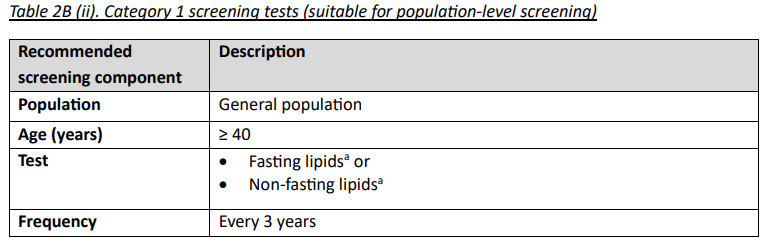
If you are 40 years old or above with no specific cardiovascular risk factors, you should get a lipid test every 3 years. This applies to the general population and serves as the baseline standard for population-level screening.
Category 2 Tests
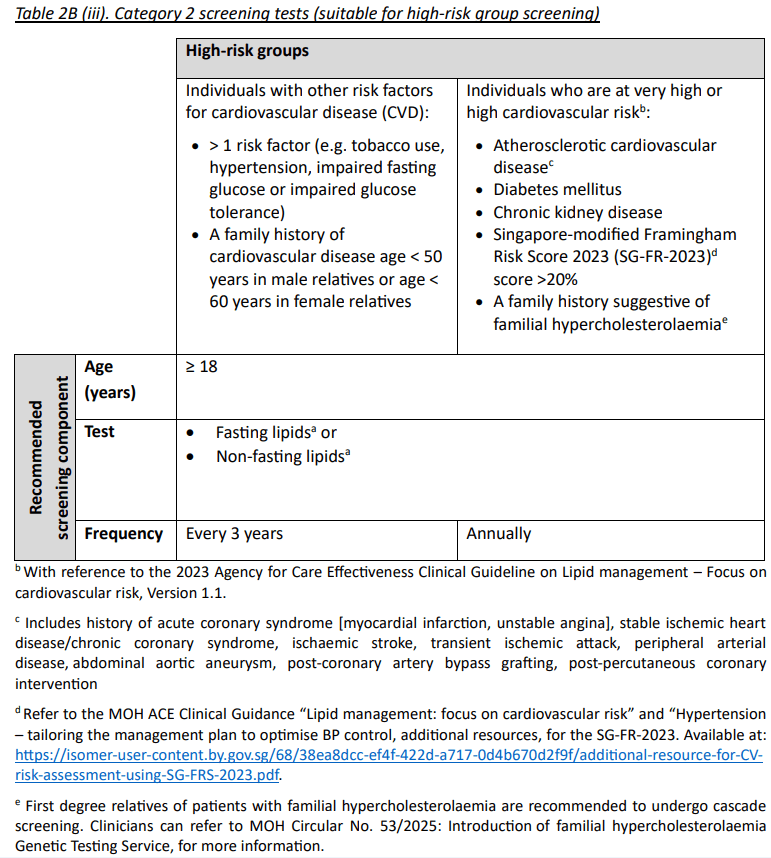
If you fall into the first group, screening is recommended from age 18, every 3 years. If you fall into the very high or high cardiovascular risk group, screening is recommended annually from age 18.
Calculate your Singapore-modified Framingham Risk Score here.
Conclusion
Hyperlipidaemia screening is straightforward, widely available, and genuinely life-saving when it leads to early intervention. If you’re 40 or older, make sure a lipid test is part of your regular health check-up. If you have known risk factors, speak to your doctor about starting sooner.
Related: Are You Due for a Diabetes Test?, High Blood Pressure Screening, Chronic Conditions Screening






Leave a Reply