

🚨 Are you aware of the signs of Intimate Partner Violence? 🚨 It can happen to anyone, and recognizing the warning signs is crucial for helping those in need. Learn how to spot IPV and make a difference in someone’s life.
What is intimate partner violence?
This is sometimes called “domestic violence.” It happens between 2 people in a close relationship. They can be married, dating, close friends, or family members.
Intimate partner violence involves abusive behaviors that can be physical, emotional, or sexual. An abuser might also use threats of violence or other controlling behaviors.
Intimate partner violence can happen to people of any age, race, gender identity, income, sexual orientation, or faith. It can happen at any time. It can take many forms and can change over time.
Screening for IPV
Multiple professional organizations endorse screening for IPV but differ in suggested target populations and do not address screening frequency. The American Medical Association (AMA) recommends that all patients be routinely screened for IPV. The US Preventive Services Task Force recommends screening asymptomatic women of reproductive age using a validated tool.
Multiple studies (1,2,3,4) suggest that IPV is more likely to be revealed when questionnaires are self-administered. Some examples of screening questionnaires are listed below:
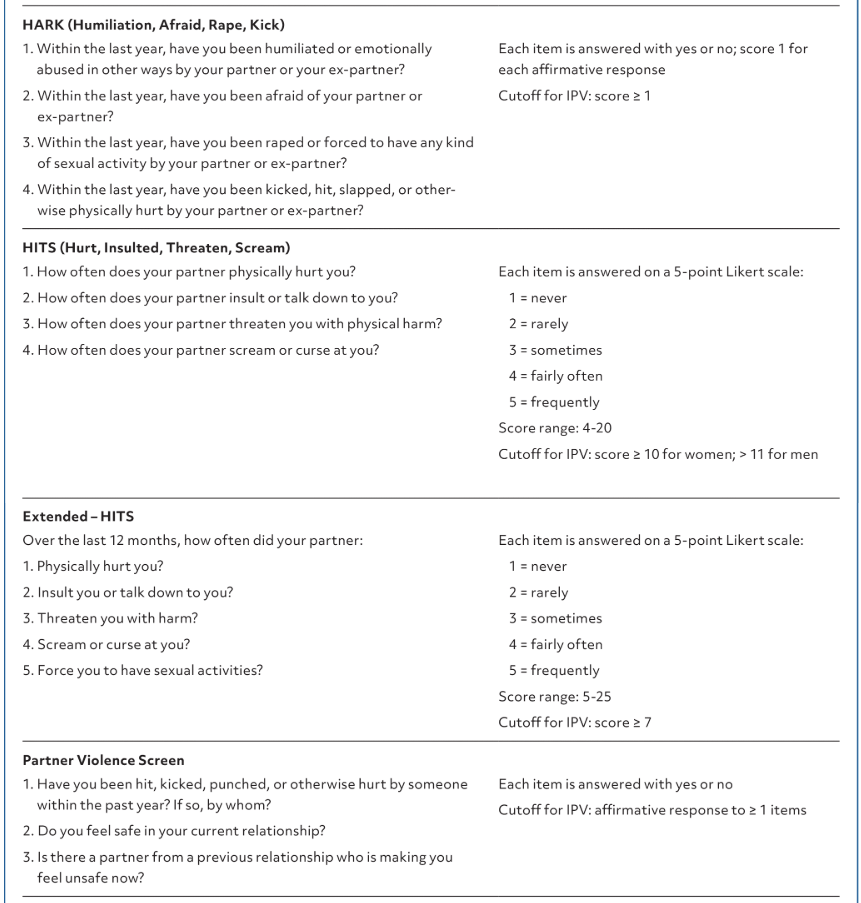
- HARK: https://www.mdcalc.com/calc/10420/humiliation-afraid-rape-kick-hark
- HITS: https://www.mdcalc.com/calc/10417/hurt-insult-threaten-scream-hits-score
How do I get help?
If you are in immediate danger, call for emergency help.
If you are experiencing intimate partner violence, the most important thing is to make sure you are safe. If you have a doctor you trust, you can ask them for help. They can help you figure out a safety plan. If you want, your doctor can also connect you with resources in your area that can offer support.
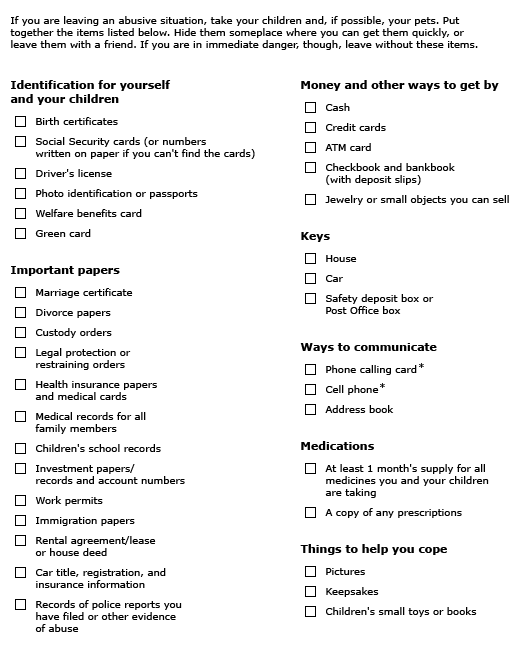
You can also go to a safe place like a friend’s or family member’s house. Crisis shelters or police stations are other safe places. If possible, make a safety plan (picture below) in advance and take your keys, money, and important papers with you.
What do I do if I think a friend or loved one might be experiencing intimate partner violence?
- Tell them the violence is not their fault.
- Give them time to talk about it if they want to.
- Offer help and support, but respect their choices. There are many reasons why a person might stay in or return to an abusive relationship.
- Encourage them to spend time with supportive friends and family members, if possible.
- Help them make a safety plan (picture above). Talk with them about what they would need in an emergency and where they can store an emergency kit outside their home. Help them figure out a safe place to stay, such as with friends or family or in a shelter.
- Connect them to people who can offer help. This could be a shelter, a safe place to stay, or an agency that helps people deal with abuse.
Further resources if you’re based in Singapore
- https://actagainstviolence.org.sg/intimate-partner-violence/
- https://www.msf.gov.sg/what-we-do/break-the-silence/domestic-violence/spousal-abuse
- https://www.msf.gov.sg/what-we-do/break-the-silence/get-help/i-am-experiencing-abuse
- https://www.aware.org.sg/womens-care-centre/helpline/
References:
- https://www.aafp.org/pubs/afp/issues/2025/0700/intimate-partner-violence.html
- https://www.uptodate.com/contents/intimate-partner-violence-diagnosis-and-screening?search=Intimate%20Partner%20Violence§ionRank=2&usage_type=default&anchor=H4534962&source=machineLearning&selectedTitle=1~97&display_rank=1#H8920209
Related: Women’s Health






Leave a Reply