

🏋️♂️💡 Knee pain got you sidelined? It could be Iliotibial Band Syndrome! Learn how to spot the signs and take charge of your recovery. Check out our latest blog for expert tips on staying active without the ache! 🚀 #ITBS #KneePain #HealthyLiving
What is Iliotibial Band Syndrome (ITBS)?
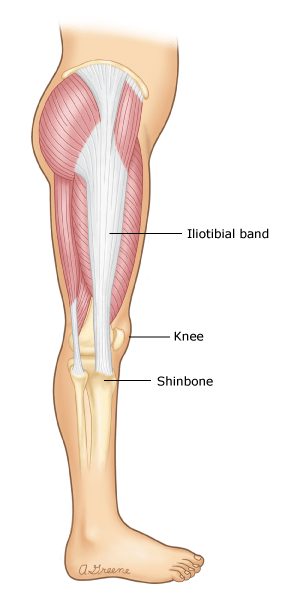
The iliotibial band (IT band) is a thick band of tissue that runs from your hip to the outside of your knee. ITBS occurs when this band becomes tight or inflamed, leading to pain and discomfort, particularly during activities that involve repetitive knee bending.
Causes of ITBS
Several factors can contribute to the development of ITBS:
- Overuse: Repetitive activities like running or cycling can irritate the IT band.
- Biomechanical Issues: Poor alignment or movement patterns can place additional stress on the IT band.
- Muscle Imbalances: Weakness in the hip or gluteal muscles can lead to increased tension on the IT band.
- Training Errors: Sudden increases in mileage or intensity without proper conditioning can trigger symptoms.
Symptoms
The hallmark symptom of ITBS is an aching, burning pain on the outside of the knee. The pain sometimes spreads up the thigh to the hip.
The pain happens when people run (or do other physical activity).
For some people, the pain lasts even after they finish their workout. Movements that make the pain worse include going up and down stairs, and standing up from a seated position.
Treatment
Fortunately, ITBS is manageable with proper care. Here are some effective treatment strategies:
1. Rest and Ice
Taking a break from activities that aggravate your symptoms is crucial. Applying ice to the affected area can help reduce inflammation and relieve pain.
2. Stretching and Strengthening
Incorporating specific stretches for the IT band and strengthening exercises for the hip and glutes can improve flexibility and stability.
3. Physical Therapy
Working with a physical therapist can provide personalized guidance on exercises and techniques to alleviate pain and prevent recurrence.
4. Gradual Return to Activity
Once symptoms improve, gradually reintroduce activities while monitoring for any signs of pain.
Prevention
- Replace your sneakers when they wear out.
- Run on even surfaces.
- Run around a track in both directions (not only in 1 direction).
- Ease up on your training, and do not run as far or as hard.
- Have an expert check how you run to make sure that you run the correct way.
Conclusion
Iliotibial Band Syndrome can be a frustrating setback for active individuals, but understanding its causes and implementing effective treatment strategies can lead to recovery and prevention. Remember to listen to your body and consult a healthcare professional if you experience persistent pain. With the right approach, you can get back to doing what you love—pain-free!
Related Articles:





Leave a reply to Back to Basics: How Worried Should You Be About Low Back Pain? – Dr Loh's Medical Blog Cancel reply