

🌟👣 Struggling with heel pain? It’s time to take action! Dive into this latest blog for essential tips on managing plantar fasciitis and getting back on your feet. Don’t let pain slow you down! #PlantarFasciitis #FootHealth #PainFreeLiving
What is Plantar Fasciitis?
Plantar fasciitis is an inflammation of the plantar fascia, a thick band of tissue that runs across the bottom of your foot, connecting your heel bone to your toes. Think of it as the bridge that supports your foot’s arch – and when it gets irritated or inflamed, it can lead to some serious discomfort.
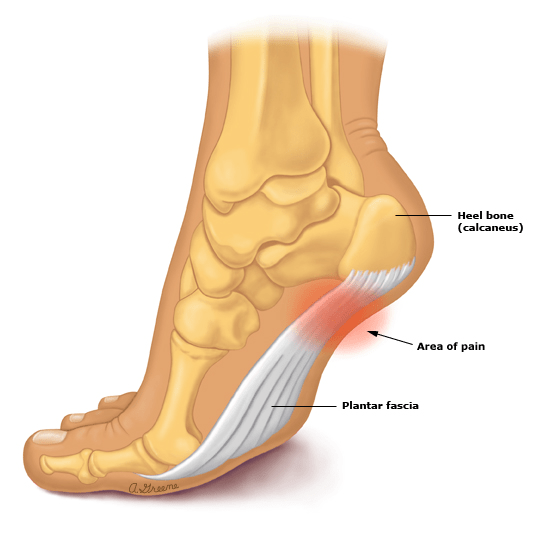
The pain is often worse:
- When you first get out of bed in the morning
- When you get up after being seated for some time
- After spending a lot of time on your feet
Risk Factors
Here are some common culprits:
- Overuse: Whether you’re training for a marathon or just walking around your house like it’s a runway, excessive activity can strain the plantar fascia.
- Foot Mechanics: Flat feet, high arches, or an abnormal walking pattern can put extra stress on the plantar fascia.
- Age: As we age, our plantar fascia can lose elasticity and become more prone to injury.
- Obesity: Extra weight adds more pressure on your feet, increasing the risk of developing plantar fasciitis.
- Improper Footwear: Shoes that lack support or cushioning can contribute to this condition. Remember, flip-flops are great for beach days but not so much for daily wear!
What Can You Do On Your Own?
- Rest – Rest your foot to help it heal. But do not completely stop being active. Doing that can lead to more pain and stiffness in the long run.
- Wear cushioned shoes – Sneakers with a lot of cushion and good arch and heel support are best. Shoes with rigid soles can also help. Adding padded or gel heel inserts to your shoes might help, too.
- Take pain medicines – If your pain is severe, you can try taking over-the-counter pain medicines. But if you have other medical conditions or already take other medicines, ask your doctor or nurse before taking new pain medicines.
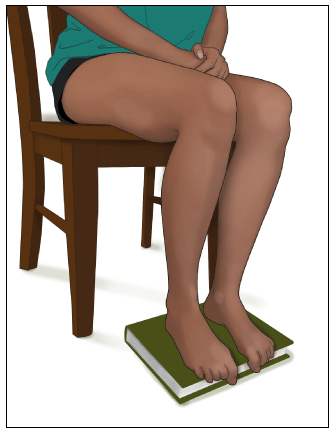
- Do special foot exercises – Certain exercises might help with heel pain:
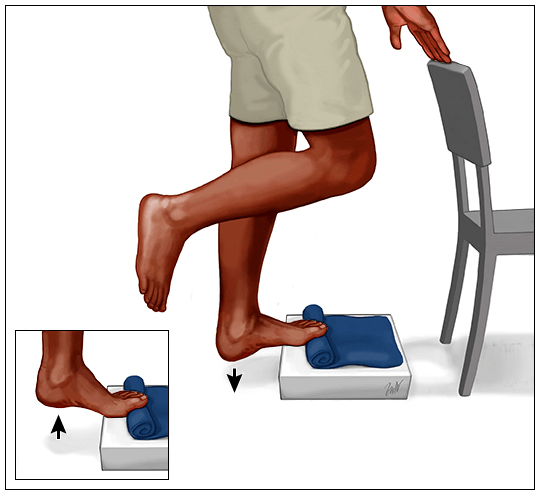
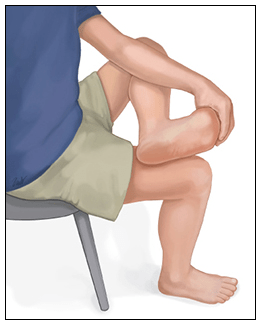
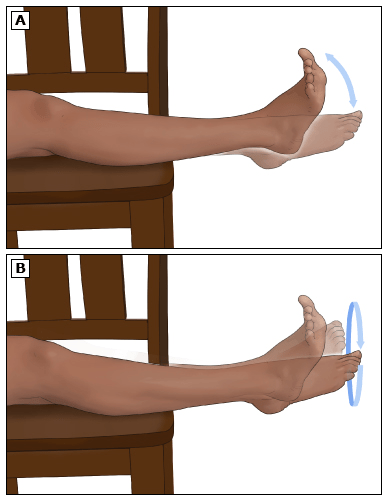
(A) Point and flex your foot a few times.
(B) Then, make a few circles with your foot by rotating your ankle.
Make a few ankle circles going in the other direction. Repeat this stretch 2 to 3 times, 1 to 3 times each day. Source: https://www.uptodate.com/services/app/contents/graphic/view/PI/70569/FootAnkleCirclesPI.jpg
- Taping up your foot in a special way that helps support the foot
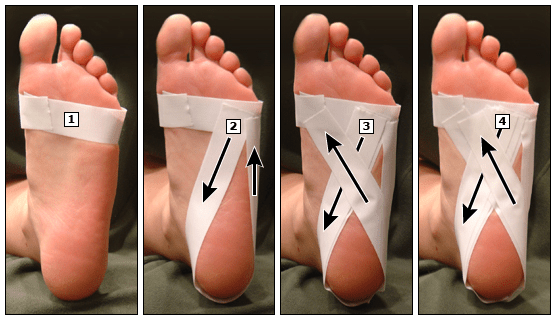
Step 1: Wrap a strip of tape around the foot, at the level of the ball of the foot.
Step 2: Wrap a second strip of tape around the heel, starting just below the pinky toe, around the sides of the heel, and back up to the first strip of tape.
Step 3: Wrap a third strip of tape around the heel, starting just below the pinky toe, like you did in step 2. This time, circle the heel and wrap the tape in a crisscross, so that it ends just below the big toe.
Step 4: Repeat step 3. The tape does not need to align perfectly. The tape can stay in place for 1 week. Source: https://www.uptodate.com/services/app/contents/graphic/view/PI/53721/FoottapingPI.jpg
What Can The Doctor Do For You?
- Prescribe painkillers
- Steroid injection — People with more acute and severe pain may benefit from an injection of a steroid medication in the foot.
How Can You Prevent Getting Plantar Fasciitis Again?
- Wear shoes that fit well, have a lot of cushion, and support your heel and ankle.
- Do not wear slippers, flip-flops, slip-ons, high heels, or poorly fitted shoes.
- Do not go barefoot.
- Do not wear worn-out shoes.
Conclusion
Plantar fasciitis might be a mouthful to say, but with proper care and attention, it doesn’t have to be a long-term problem! If you’re experiencing persistent heel pain, don’t hesitate to consult with your doctor for an accurate diagnosis and tailored treatment plan.
Related Articles:






Leave a reply to Tennis Elbow: Understanding, Preventing, and Healing the Pain – Dr Loh's Medical Blog Cancel reply