

📊 Ready to take charge of your health? Learn how to measure your BMI and waist circumference like a pro! 🏃♂️✨ These simple steps can reveal important insights about your body. Dive into our guide and empower yourself today! 🔍💚 #HealthMatters #SelfCare #BMI
Understanding your body measurements can be a simple yet important part of maintaining your health. Two important metrics are Body Mass Index (BMI) and waist circumference. Let’s dive into how you can measure them yourself!
NOTE: The recommendations are for the general average individual. If you’re an athlete or a body builder, these measurements may not be an accurate indicator for your health – please discuss with your doctor about specific recommendations for if that’s the case.
Measuring Your BMI
What is BMI?
BMI is a simple calculation used to assess whether you have a healthy body weight for your height. It helps categorize you into underweight, normal weight, overweight, or obese.
How to Calculate Your BMI
1. Get Your Measurements:
- Weight: Weigh yourself in kg using a reliable scale (preferably in the morning before breakfast).
- Height: Measure your height in meters.
2. Calculate BMI:
- The formula for BMI is weight in kilograms (kg) divided by height in meters (m) squared
- For example, if your weight is 80kg and height is 1.8m, your BMI will be 80 divide by 1.82 = 24.69
- You can also use a BMI calculator here.
Interpret Your BMI
The BMI cutoffs for overweight and obesity is lower for Asians:
- Underweight: BMI < 18.5
- Normal weight: 18.5 ≤ BMI < 22.9
- Overweight: 23 ≤ BMI < 27.5
- Obesity: BMI ≥ 27.5
These are the BMI interpretations for the rest of the world:
- Underweight: BMI < 18.5
- Normal weight: 18.5 ≤ BMI < 24.9
- Overweight: 25 ≤ BMI < 29.9
- Obesity: BMI ≥ 30
Measuring Your Waist Circumference
Why Waist Circumference?
Waist circumference is an important measurement because it helps assess abdominal fat, which can be a risk factor for various health issues.
How to Measure Your Waist Circumference
1. Get a tape: A flexible measuring tape that measures in inches.
2. Find the Right Spot: Locate the top of your hip bones
- Start by standing up straight with your feet shoulder-width apart. This position helps you feel your bones more easily.
- Put your hands on your hips, with your thumbs pointing towards your back and your fingers wrapping around to the front.
- Move your fingers along the side of your abdomen towards your back until you feel a bony ridge. This ridge is the iliac crest.
- You can run your fingers along this ridge to get a better sense of its shape and position, to get the highest point of the iliac crest.
3. Measure:
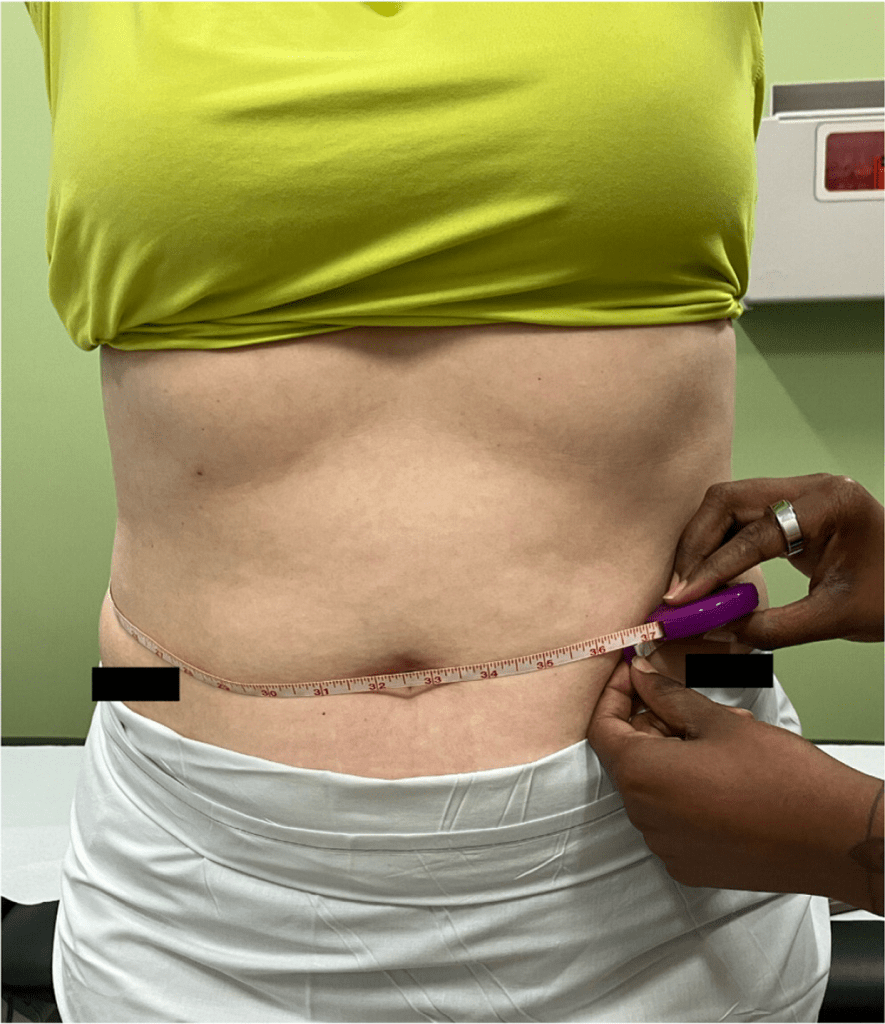
- Wrap tape measure around the waist just above the iliac crests.
- Let the tape measure rest against the skin; do not pull taut.
- Inhale and then exhale.
- Measure the waist circumference after exhalation and record the measurement in inches.
Interpret Your Waist Circumference
Once again, the cutoff value to indicate increased health risk is lower in Asians:
- For men, a waist circumference greater than 35 inches indicates increased health risks.
- For women, it’s greater than 31 inches
These are the waist circumference interpretations for the rest of the world:
- For men, a waist circumference greater than 40 inches indicates increased health risks.
- For women, it’s greater than 35 inches.
Conclusion
Measuring your BMI and waist circumference is essential for understanding your health. Do see your doctor if your measurements fall outside the healthy range. Remember, these measurements are just one part of a larger health picture! Always consult with a healthcare professional for personalized advice.
On a related note, do also check out my other post on the importance of tracking your weight!






Leave a reply to How To Lower Blood Pressure Without Medications? – Dr Loh's Medical Blog Cancel reply