

🦴✨ Did you know osteoporosis is often called the “silent disease”? Don’t wait for a fracture to find out if you’re at risk! Discover why screening is crucial for maintaining strong bones and a healthy future. 💪 #OsteoporosisAwareness #BoneHealth
What is Osteoporosis?
Osteoporosis is a condition characterized by weak and brittle bones, making them more susceptible to fractures. It affects millions of people worldwide, particularly postmenopausal women and older adults.
Why Screen for Osteoporosis?
Identifying individuals at risk allows for early intervention, which can help prevent fractures that often result from falls and maintain bone health.
Who Should Be Screened?
These recommendations are assuming you do not have any long term medical conditions. Do consult with your own doctor for specific recommendations for you with regards to osteoporosis screening if you have long term medical conditions or previous falls/fractures.
- Men 65 years and older
- Post-menopausal women
Osteoporosis Self-Assessment Tool
for Asians (OSTA) for Risk Assessment in Postmenopausal Women
For postmenopausal Asian women, calculate your OSTA score by subtracting your weight in kg from your age in years.
For example, if you are 65 years old and your weight is 50kg, your OSTA score is 65 – 50 = 15.
Your OSTA score will determine if you are low, medium or high risk for osteoporosis.
- >20: High risk
- 0-20: Medium risk
- <0: Low risk
Alternatively, you can refer to the this table:
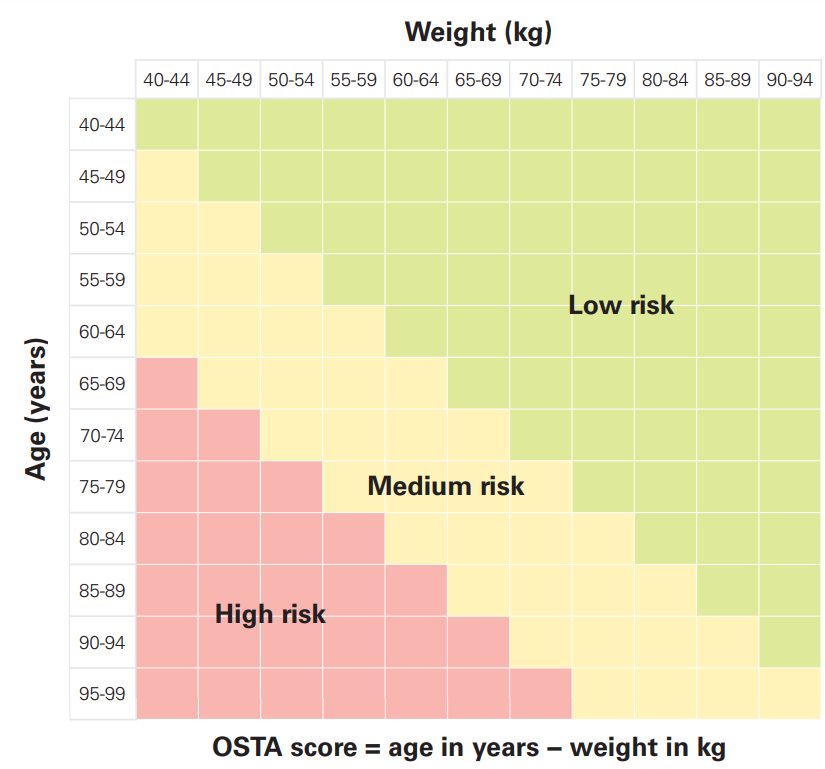
You can also download the PDF version of the table here.
If your score is high risk, an osteoporosis screening scan will be highly recommended. If you score medium or low risk, you should still discuss with your doctor the specific recommendations for you depending on your other health conditions.
How is Osteoporosis Screened?
The most common method for screening osteoporosis is through a Dual-Energy X-ray Absorptiometry (DEXA) scan. This test measures bone mineral density (BMD) and helps determine if an individual has osteoporosis or is at risk.
What to Expect For a DEXA Scan:
- Preparation: No special preparation is needed; just wear comfortable clothing.
- Duration: The scan typically takes about 10-30 minutes.
- Results: Your doctor will discuss the results and any necessary follow-up steps.
Lifestyle Changes to Support Bone Health
In addition to screening, there are several lifestyle changes that can help improve bone health:
- Nutrition: Ensure adequate intake of calcium and vitamin D through diet or supplements.
- Exercise: Engage in weight-bearing exercises like walking, jogging, or resistance training.
- Avoid Smoking and Excessive Alcohol: Both can contribute to bone loss.
Conclusion
Osteoporosis screening is a vital step in maintaining bone health and preventing fractures. By understanding your risk factors and taking proactive measures, you can significantly reduce your chances of developing this silent disease. Encourage your loved ones to discuss screening options with their doctors—after all, prevention is always better than cure!
Related Health Screening Articles:
- Tips For Health Screening
- High Blood Pressure Screening
- ABPI Made Easy: A Simple Guide to Assessing Ankle-Brachial Pressure Index
- Are You At Risk for Obstructive Sleep Apnea (OSA)?
- Preventing the Plunge: Essential Screening for Fall Risk
- Are Your Bones Strong? The Essential Guide to Osteoporosis Screening & Prevention
- Colorectal Cancer Screening
- Cervical Cancer Screening





Leave a reply to Back to Basics: How Worried Should You Be About Low Back Pain? – Dr Loh's Medical Blog Cancel reply