

Most people find out they have diabetes at a routine check-up — not because they felt sick. That’s because type 2 diabetes has almost no symptoms in the early stages. Here’s who should be getting screened, and how often.
The Screening Test Review Committee (STRC) develops evidence-based recommendations on the appropriate use of screening tests in Singapore, serving as
professional guidance to healthcare professionals. The last report of the STRC’s was published in 2019. Now, they have published an updated report, which will be covered here, with the focus on diabetes screening.
Diabetes Screening Tests

As a recap, Category 1 tests are recommended for everyone in the specified age group, Category 2 tests are recommended for high-risk individuals, and Category 3 tests are not recommended for health screening.
Category 1 Tests
If you are part of the general population — meaning you have no specific risk factors — routine screening is recommended once you reach a certain age.
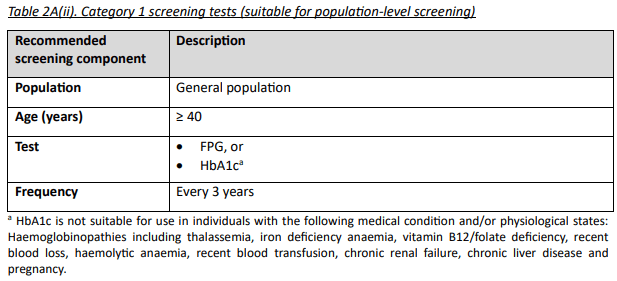
If you’re 40 or older and haven’t had a diabetes screen recently, this is your reminder to book one. Every 3 years is the recommended interval — though your doctor may suggest more frequent checks depending on your overall health picture.
Category 2 Tests
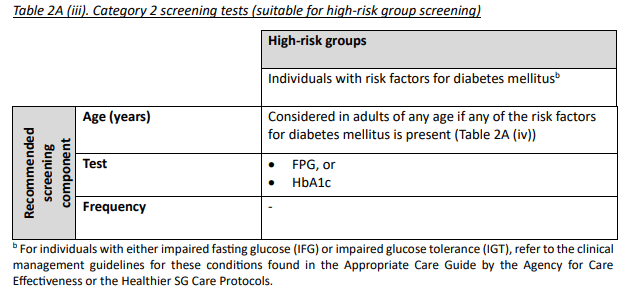
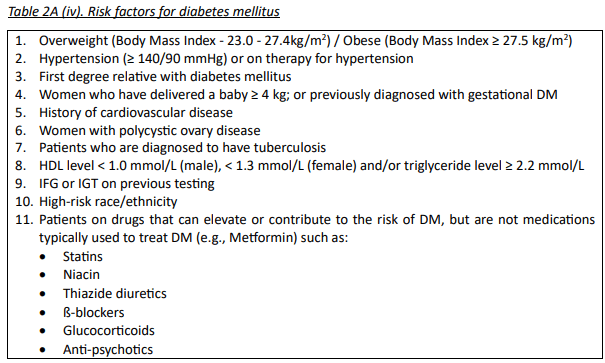
For individuals with known risk factors, the rules change. Screening is recommended regardless of age — meaning even adults in their 20s or 30s should be tested if risk factors are present.
Conclusion
Diabetes screening isn’t just a box to tick. It’s a genuine opportunity to catch a serious condition before it causes lasting damage. The good news: the tests are simple, quick, and widely available.
If you’re 40 or above, make screening part of your regular health routine. If you have any of the risk factors listed above, don’t wait — speak to your doctor about getting tested now, regardless of your age.
Related: Cancer Screening





Leave a comment