

🎾 Think tennis elbow is just for athletes? Think again! Discover how this pesky condition can sneak into your life and what you can do to serve it an ace! 🏥✨ #TennisElbow #HealthTips #PainRelief
Recently, I picked up playing tennis recreationally in an attempt to add more fun to my exercise. I thought it will be interesting to try a one-handed backhand. To be clear, I did not have much previous experience with tennis nor was I ever coached on how to do the proper stroke. I did it a few times with no issues…or so I thought.
I woke up the next day with this pain on the outside of my right elbow. I examined myself (as all doctors do) and to my horror, I concluded that I have gotten the aptly named “tennis elbow“.
On the bright side, I am now able to put myself in my patient’s shoes and apply the advice that I usually give my patients with tennis elbow.
We shall learn how to treat this condition and more importantly how to prevent it.
NOTE: As always, this is not meant for self-diagnosis – please always consult your doctor to get a diagnosis first.
What is tennis elbow?
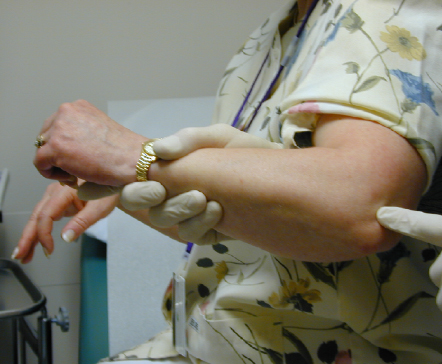
The medical term is “lateral elbow tendinopathy” or “LET”. The word “tendinopathy” refers to a problem with a tendon. Tendons are strong bands of tissue that connect muscles to bones. In the case of tennis elbow, the tendons connect the muscles of the forearm to the outer part of the elbow. That is where the pain is experienced, as shown in the photo below.
What causes tennis elbow?
Unlike my sad personal anecdote, playing tennis amateurly is not the only way to get tennis elbow. This condition can happen as people get older, especially if they do a lot of work or activity using their elbow and forearm. It can also happen when people get hurt or do the same movements over and over.
What are the symptoms of tennis elbow?
The most common symptoms are:
- Elbow pain – This is the main symptom. It can spread to the upper arm or forearm. Pain is most common when the tendon is working or stretched.
- Muscle weakness – The forearm muscles might feel weak.
- Swelling – Some people might have mild swelling in the elbow area.
How is tennis elbow treated?
Most of the time, it gets better on its own, but it can take months to heal completely. To help get better, you can:
- Rest your elbow and arm – If possible, try to avoid or reduce activities that make your pain worse.
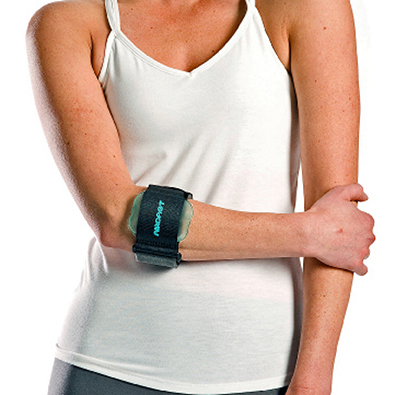
- Wear a brace – A tennis elbow brace or strap applies pressure to the muscles of the forearm, reducing pressure on the injured tendon in the elbow. You can use the brace or strap while working or playing sports. Apply the brace so that the cushion is resting on your forearm muscles, about 10 cm from the tip of the elbow bone. You may need to wear the brace for up to six weeks. See photo below:
- Take a pain-relieving medicine – follow your doctor’s prescription accordingly.
- Put ice on your elbow – This might help after doing activities that make your pain worse. Put a cold gel pack or a bag of ice on the area every 1 to 2 hours, for 15 minutes each time. Put a thin towel between the ice (or other cold object) and your skin.
- Flexibility exercises – Flexibility (or stretching) exercises improve elbow and wrist mobility, and may help relieve symptoms in the short-term.
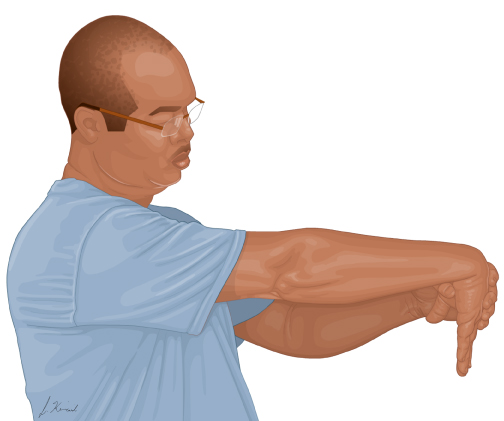
Credit: UpToDate https://www.uptodate.com/services/app/contents/graphic/view/PI/65485/ForearmExtensorStretchPI.jpg
- Strengthening exercises – A special type of strengthening exercise, known as “eccentric strengthening,” is the most effective way to treat elbow tendinopathy. You should expect to feel some mild discomfort with these exercises. If the pain becomes sharp or is more than moderate, stop the exercise and rest for two to three days. Restart with fewer repetitions.
- Sit with your arm supported (on a table) at shoulder height. The back of your hand should face the ceiling, and your hand should hang off the table. Start with your elbow bent, which is less painful, then progress to keeping your elbow straight.
- Hold a 1 pound (approximately 500g) weight in the hand. Using the unaffected hand, lift the hand with the weight toward the body, bending the wrist (keep the arm flat against the table).
- Move the unaffected hand away, and slowly allow the affected hand (with the weight) to lower.
- Repeat 15 times, then rest one minute. Repeat two more times.
- Perform five times per week.
- After one week, try to lift the hand with the weight without assistance. Increase the weight by 1 to 2 pounds per week. Do not increase the weight unless you can complete 15 lifts.
As I do not have a 1 pound dumbbell, I use a filled 500ml water bottle instead.
What if my symptoms don’t get better?
If you have been doing your exercises for at least 8 to 12 weeks and your symptoms are not getting better, talk with your doctor. They can suggest other treatments that might help. Some people will need formal rehabilitation with a physical therapist.
Can tennis elbow be prevented?
I hope that you will not have to experience what I did. To help prevent elbow tendinopathy, you can:
- Take breaks when you do activities that involve moving your elbow and wrist a lot.
- Keep your elbows slightly bent when you exercise or lift things.
- When using tools, increase the gripping surface by wearing gloves or adding padding. Use a hammer with extra padding to reduce tension and impact. Hold heavy tools with two hands.
Some specific tennis related advice:
- Use a two-handed backhand in tennis.
- When hitting a tennis stroke, use your entire lower body, hip, pelvis, and back, and use less of your elbow.
- Some suggest lowering string tension, finding the heaviest racket that does not affect your swing speed, finding the largest grip that is comfortable, and using softer strings.
- (In short, get a proper tennis coach who can advice you properly on all of the above.)
Conclusion
By understanding the causes, implementing preventive measures, and following proper treatment protocols, you can effectively manage and overcome this condition.
Meanwhile, perhaps it is time for me to switch to table tennis instead.
Related Articles:






Leave a comment