
Having a nosebleed can be scary, but most nosebleeds are nothing to be concerned about. This article will outline what you can do to stop a nose bleed, when you should see a doctor and how to prevent nosebleeds.
Common benign causes of nosebleeds:
- Breathing dry air all of the time
- Using steroid nasal sprays too much
- Nose picking
- Upper respiratory tract infections
To stop a nosebleed:
1. Sit down while bending forward a little at the waist. This will reduce the swallowing of bleed from the nose, which can cause nausea or vomiting. Do not lie down or tilt your head back.
2. Pinch the soft area on both sides toward the bottom of your nose, below the bone (see image below). Do not grip the bridge of your nose between your eyes. Do not press on just 1 side, even if the bleeding is only on 1 side.
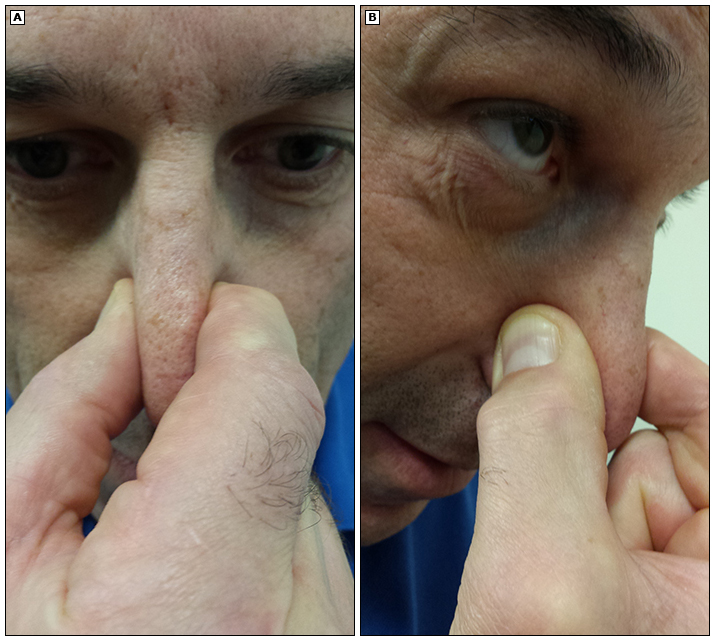
3. Squeeze your nose shut for at least 10 to 15 minutes. Do not release the pressure before the time is up to check if the bleeding has stopped. If you keep checking, you will reduce your chances of getting the bleeding to stop.
If you follow these steps, and your nose keeps bleeding, repeat all of the steps once more. Apply pressure for a total of at least 30 minutes.
If you are still bleeding, go to the emergency department or an urgent care clinic.
You should also see a doctor immediately if your nosebleed:
- Happens with other serious symptoms, such as chest pain, difficulty breathing or giddiness. Call an ambulance if you have such symptoms.
- Happens right after surgery on your nose, or if you know you have a tumour or other growth in your nose.
- Happens after an accident or trauma to the face.
- Will not stop, and you take blood thinners (e.g. aspirin, warfarin, rivaroxaban)
Things to avoid for 24 hours after a nosebleed to reduce rebleeding:
- Heavy lifting
- Bending over
- Blowing your nose very hard
General measures to reduce nosebleeds:
- Use a humidifier in your bedroom while sleeping, especially when the air is very dry
- Keep your nose moist using a saline nasal spray or gel
- Avoid picking your nose or, if you must do it, clip your fingernails to avoid injury
Note: Do see a GP doctor for further evaluation even if you manage to stop the bleeding if you notice that it is happening very frequently. Depending on the assessment, the doctor may refer you to see an ENT specialist for evaluation.
References:
- Svider P, Arianpour K, Mutchnick S. Management of Epistaxis in Children and Adolescents: Avoiding a Chaotic Approach. Pediatr Clin North Am 2018; 65:607.
- Tunkel DE, Anne S, Payne SC, et al. Clinical Practice Guideline: Nosebleed (Epistaxis). Otolaryngol Head Neck Surg 2020; 162:S1.
- Tunkel DE, Anne S, Payne SC, et al. Clinical Practice Guideline: Nosebleed (Epistaxis) Executive Summary. Otolaryngol Head Neck Surg 2020; 162:8.
- Béquignon E, Teissier N, Gauthier A, et al. Emergency Department care of childhood epistaxis. Emerg Med J 2017; 34:543.
- Calder N, Kang S, Fraser L, et al. A double-blind randomized controlled trial of management of recurrent nosebleeds in children. Otolaryngol Head Neck Surg 2009; 140:670.
- Baugh TP, Chang CWD. Epidemiology and Management of Pediatric Epistaxis. Otolaryngol Head Neck Surg 2018; 159:712.
- Bernius M, Perlin D. Pediatric ear, nose, and throat emergencies. Pediatr Clin North Am 2006; 53:195.
- Qureishi A, Burton MJ. Interventions for recurrent idiopathic epistaxis (nosebleeds) in children. Cochrane Database Syst Rev 2012; :CD004461.
- McGarry G. Nosebleeds in children. Clin Evid 2005; :399.
- Kucik CJ, Clenney T. Management of epistaxis. Am Fam Physician 2005; 71:305.
- Schlosser RJ. Clinical practice. Epistaxis. N Engl J Med 2009; 360:784
- Viehweg TL, Roberson JB, Hudson JW. Epistaxis: diagnosis and treatment. J Oral Maxillofac Surg 2006; 64:511.
- Seikaly H. Epistaxis. N Engl J Med 2021; 384:944




Leave a comment